Operational excellence is often described as a journey or a pursuit because there really isn't a point where the work is finished. There will always be another problem to solve, another process to improve, or a better way of doing something. So maybe the better measure of progress isn't how close you are to some ideal state, but whether your organization is getting better at improving.
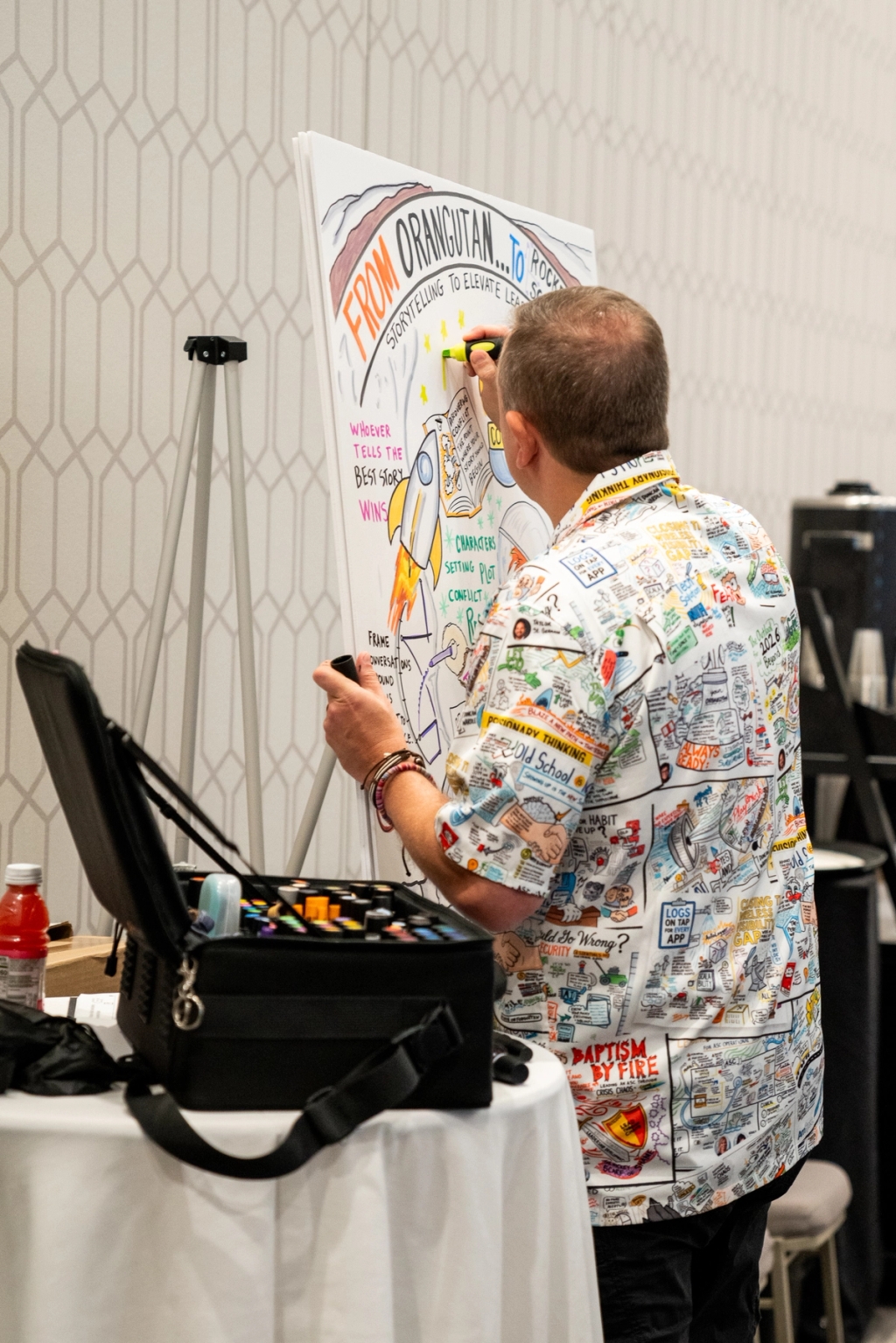
Live illustrations at BP4OpX 2026
That can show up in many ways: seeing how work actually happens, involving the people who do it, connecting strategy to everyday decisions, adjusting when a plan doesn't work as expected, and building the skills and systems that allow improvement to continue.
Those ideas surfaced again and again at the 2026 Best Practices for Operational Excellence Conference, an annual gathering of senior operational excellence leaders and practitioners.
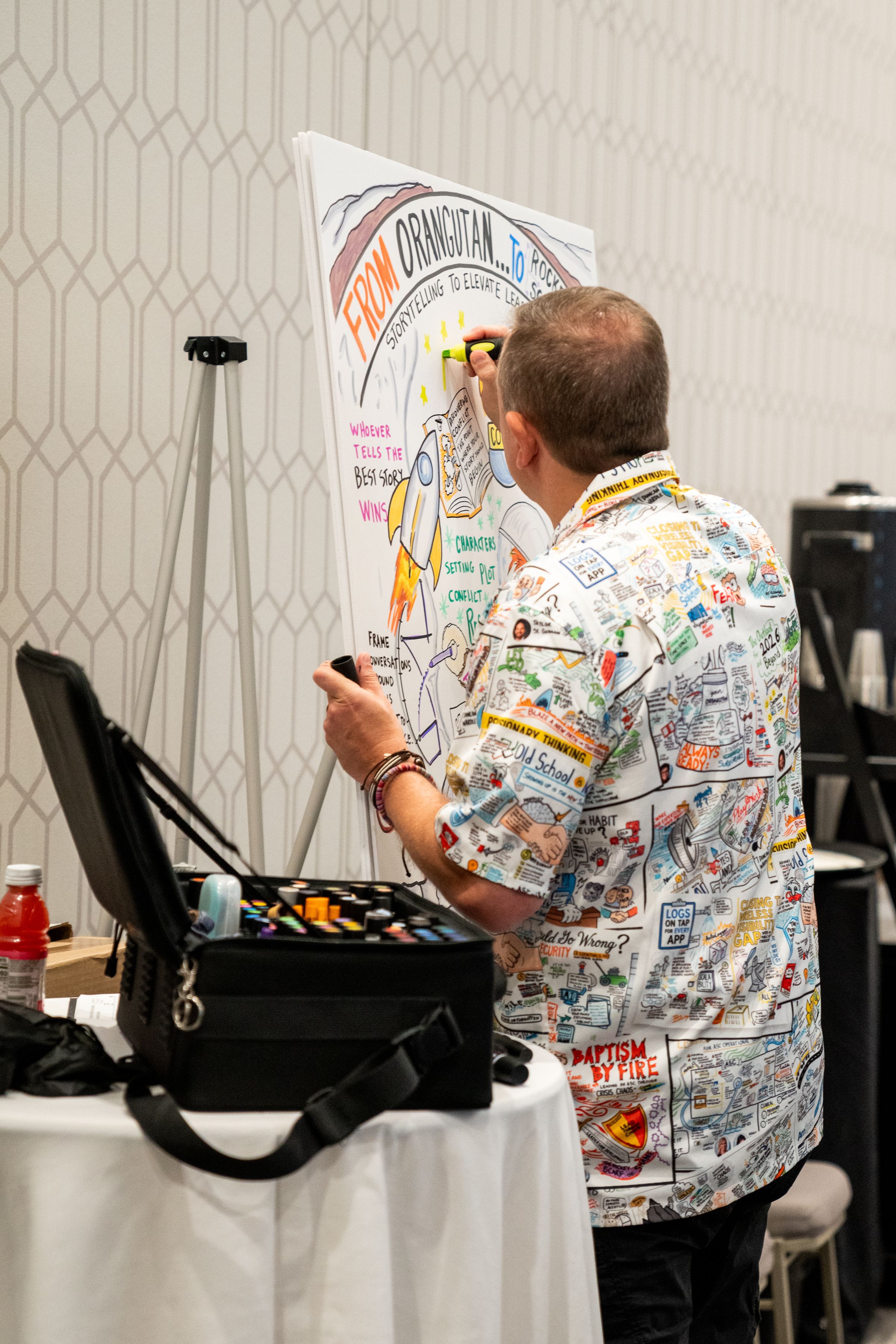
Speakers shared the stories, systems, experiments, successes, and setbacks behind their improvement efforts. As they spoke, live illustrator Matt Orley of Big Paper Strategy translated each presentation into a beautiful visual display.
The finished illustrations, viewed together, revealed several connections that ran throughout the conference: people need to understand why change matters; those closest to the work need a role in shaping it; strategy must reach into daily operations; and even the best plans must evolve when they encounter reality.
Make the Work Visible
Creating an environment for improvement begins by helping people see something they could not see clearly before. Sometimes that means making data easier to access or easier to understand. Sometimes it means modeling a process to better visualize flow, telling a process story in a way that compels people to want to engage in improving it, or looking beyond individual actions to see the larger system in which they occur.
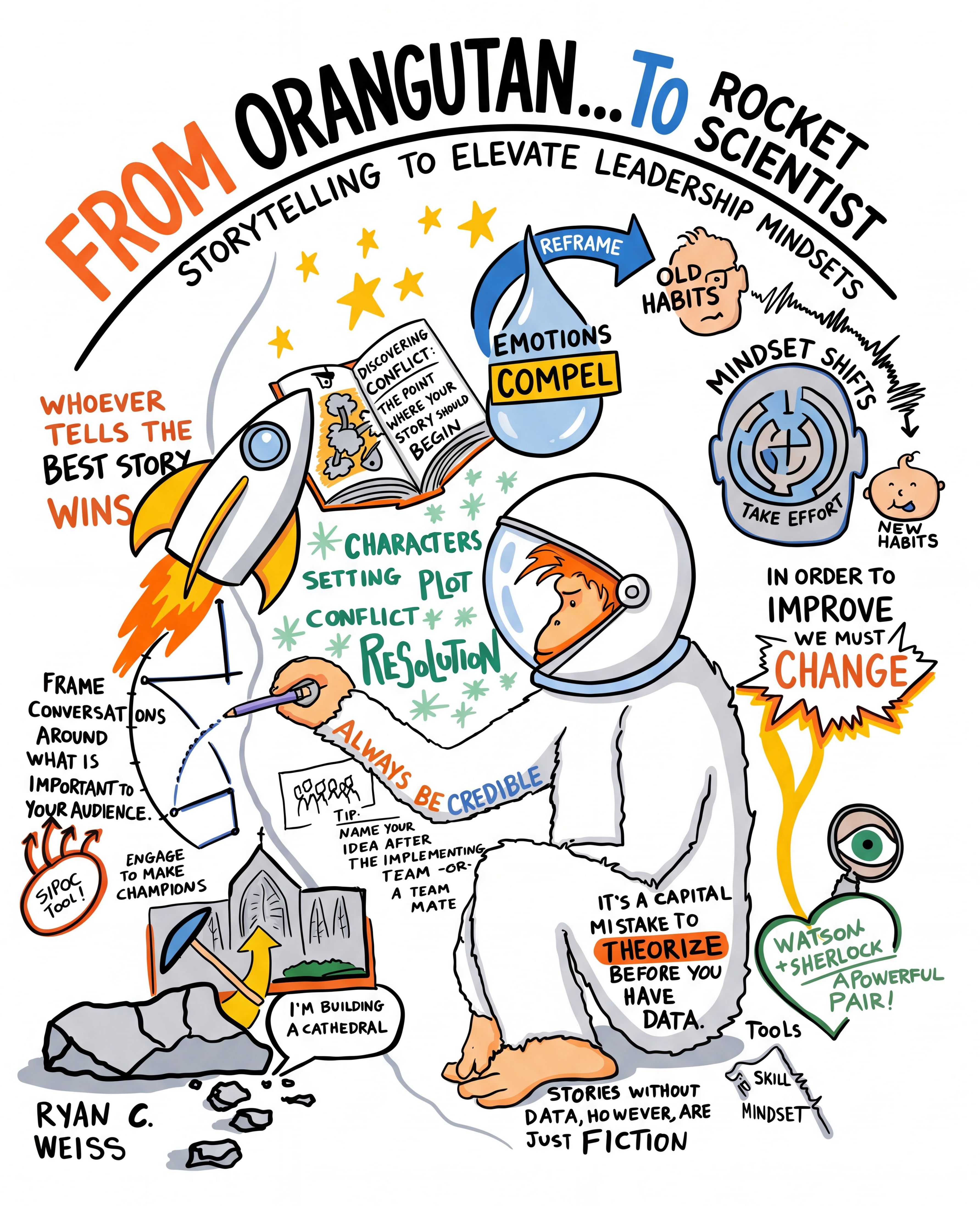
Ryan Weiss opened the conference by exploring storytelling as a tool for leading change. When people do not understand why a change is happening, it can feel very arbitrary. People’s natural resistance grows, and even if they adopt the change, it becomes more difficult for the new behavior to persist over time.
Data remains essential in helping people understand the ‘why’ behind a change, but data alone doesn’t always change people's mindsets. An effective Lean Six Sigma practitioner must connect the analysis to the people, the conflict, the purpose, and the possible resolution. Weiss demonstrated how familiar Lean Six Sigma tools can help tell that story. A SIPOC, for example, does more than document suppliers, inputs, processes, outputs, and customers. It can help frame the setting, characters, and scope of an improvement effort. He urged the audience to consider the art of storytelling and its importance in effecting sustained change.
Greg Poyet-Smith of Amazon showed another way to make improvement work visible: by building a reporting infrastructure capable of tracking projects, financial impact, training, and progress across a large operational excellence program. The right information allows an organization to see where improvement is occurring, demonstrate its value, and identify where opportunities remain.
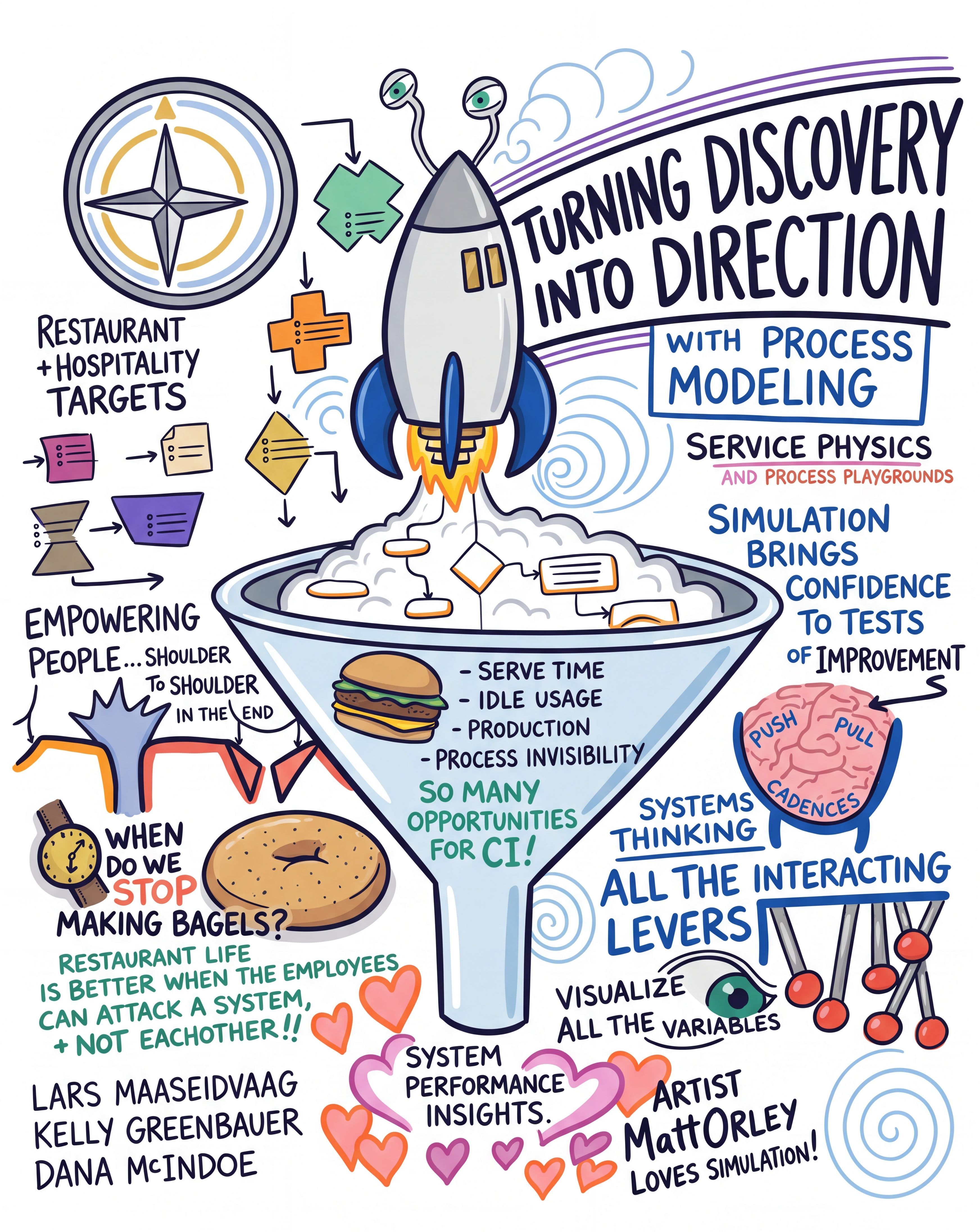
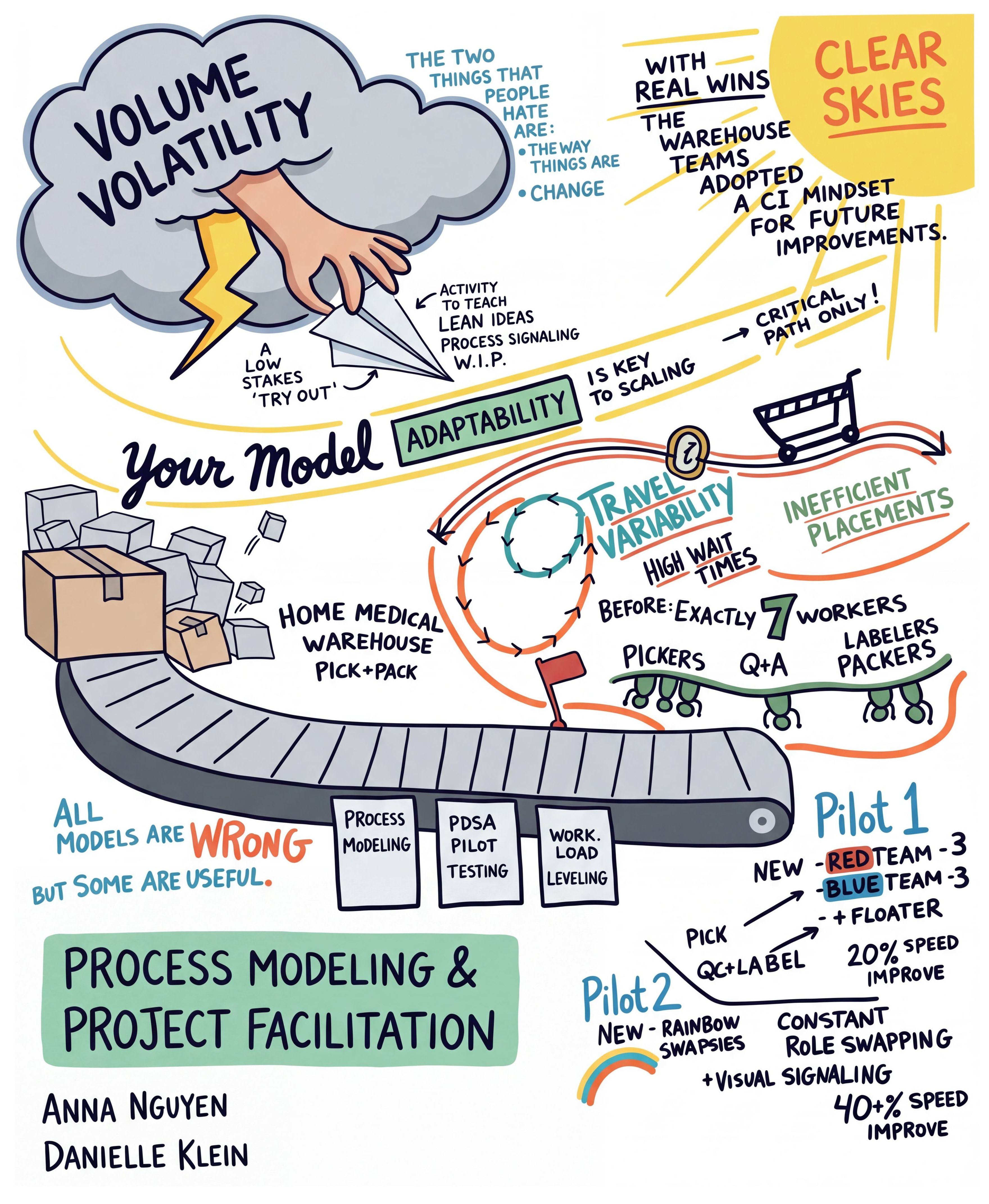
Process modeling adds another perspective. Lars Maaseidvaag and Kelly Greenbauer demonstrated how models help teams visualize relationships among the many levers operating within a system. Process modeling allows teams to explore how changes in process parameters such as demand, staffing, cycle times, inventory, and more, impact process outcomes. This type of scenario testing steers people away from debating assumptions or improvement ideas while also protecting against improving one part of the process only to impact something negatively downstream.
By making the system visible, modeling gives employees a shared problem to examine. In the words captured by the conference illustration, they can “attack a system, not each other,” moving the conversation away from blame and toward shared discovery.
Create Change With People, Not for Them
Making problems visible is only the beginning. Many presentations reinforced a second, very important notion: the people doing the work should help improve it.
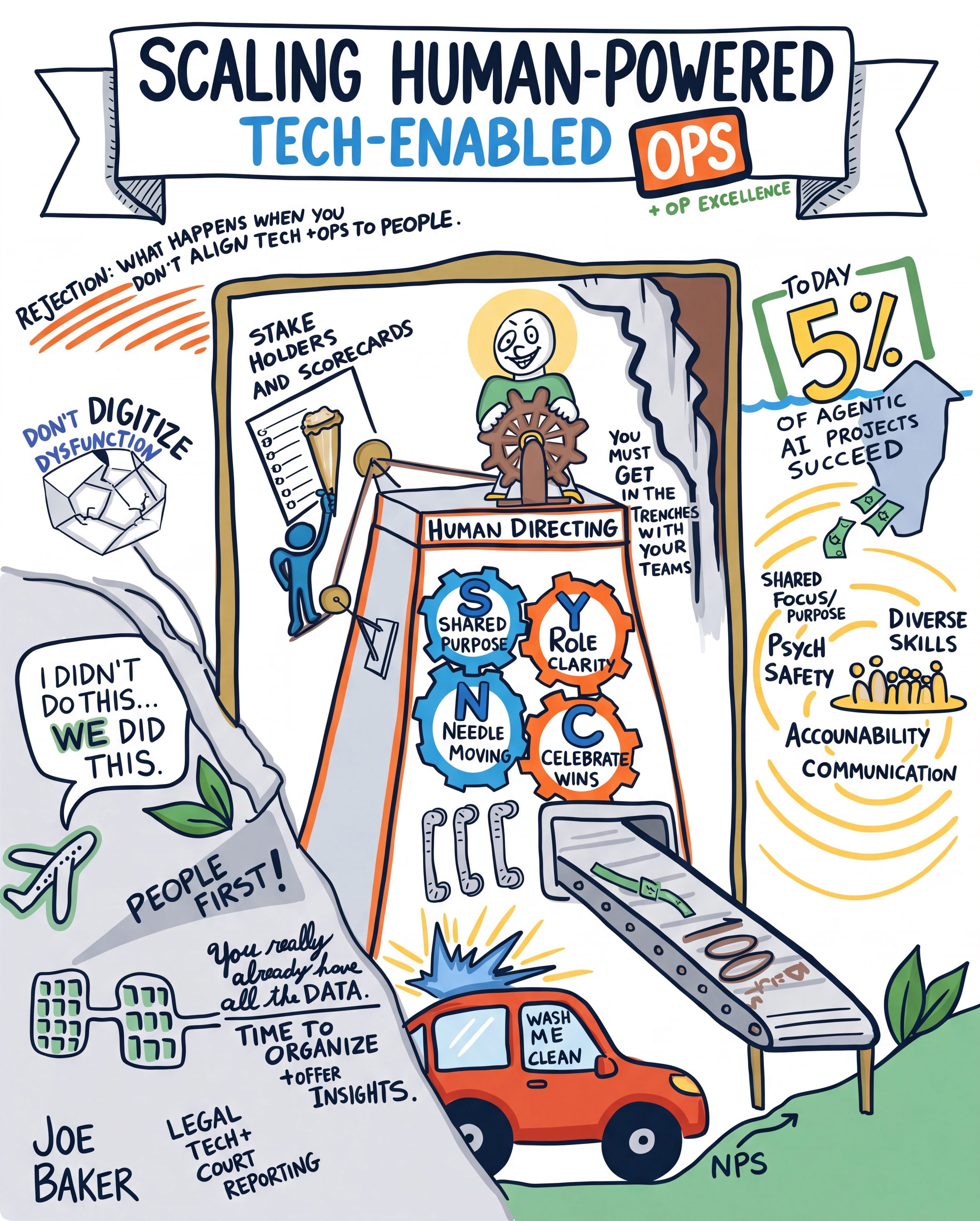
Joe Baker of Veritext Legal Solutions illustrated this through a story from earlier in his career at Hertz. He was asked to improve one of the company’s worst-performing locations. Rather than arriving with a predetermined solution, he involved employees in examining what was happening, understanding why it was happening, and developing ideas for how to fix it. The “Pit Crew,” as they called themselves, felt a sense of ownership of the path forward, and that made all the difference.
The location ultimately went from one of the company’s worst performers to one of its best. As Baker’s live illustration captured it:
“I didn’t do this. We did this.”
Anna Nguyen and Danielle Klein of Nationwide Children’s Hospital described a similar approach in a very different setting. Their team was working with a home medical equipment warehouse that experienced significant variation in the number of patient orders packed each day. On high-volume days, the existing process could not keep up without supervisors and managers stepping in to pick and pack orders.
As the team developed ideas for improving their situation, Anna and Danielle used process modeling to test the viability of a better outcome with those ideas. Modeling allowed them to gain a sense of direction before experimenting with warehouse layout and the flow of work in their real setting.
Employees piloted the first proposed workflow and provided direct feedback. They liked the teamwork and the flexibility of a floating role, but moving between checking and labeling proved difficult because bottlenecks developed at the labeling computers, and the float employee did not always know where to help.
That feedback was used as input to the second pilot. The revised workflow incorporated designated labelers, rotating roles, visual signals, fewer carts, and ideas employees identified while doing the work. The team preferred the new approach, and its performance supported what they experienced firsthand.
This approach, having the people doing the work participate in improving the work, is so much more meaningful than securing “buy-in” after a solution has already been chosen. It not only reduces the natural resistance that accompanies change but also leads to a better overall solution because participants bring essential operational knowledge to the table.
Connect Strategy to Daily Work
Participation matters greatly at the organizational level, too. A strategy cannot produce its intended results if it remains separated from daily work.
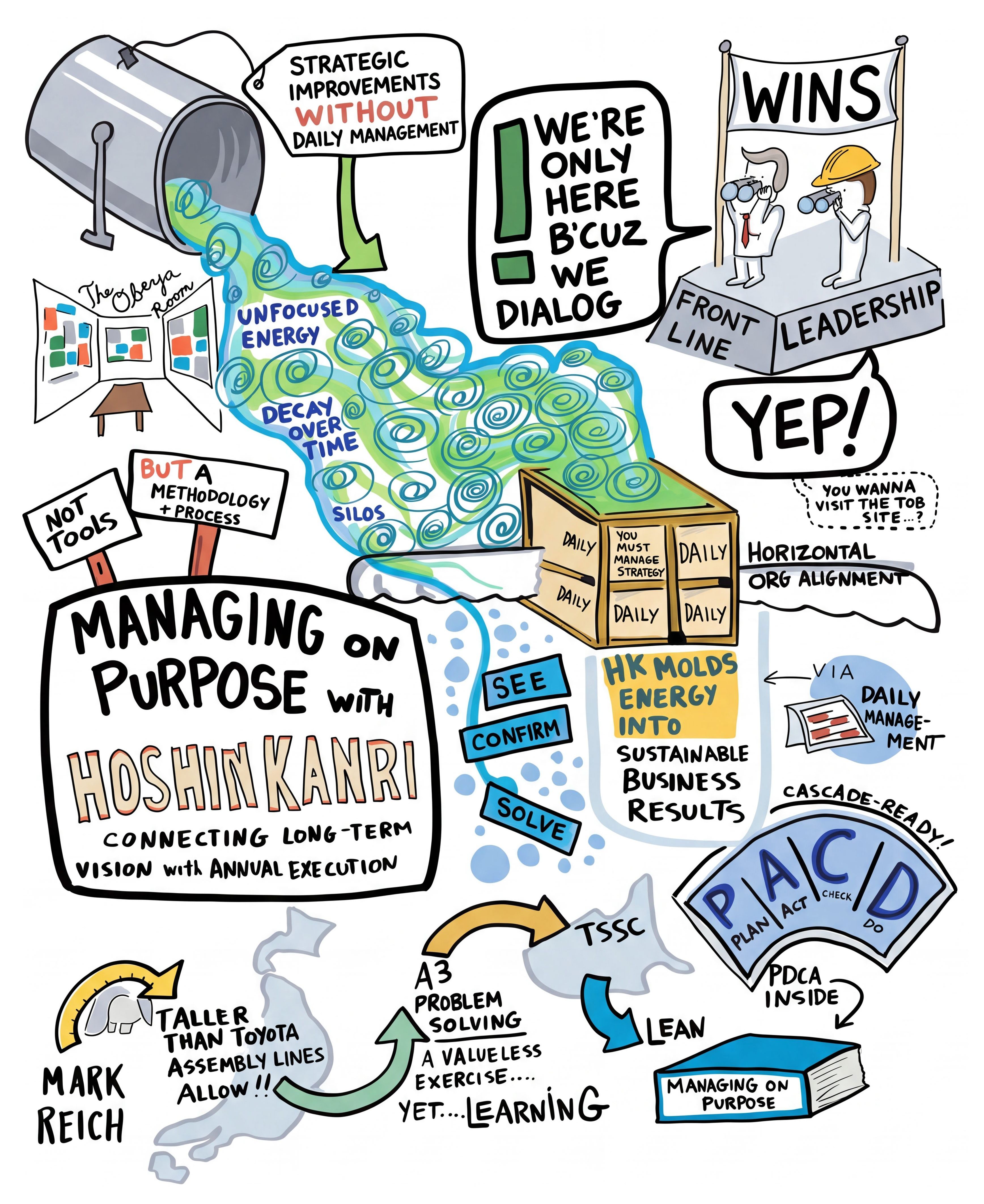
Mark Reich of the Lean Enterprise Institute contrasted Hoshin Kanri with a more traditional model of strategy deployment. Instead of priorities flowing top down, Hoshin Kanri creates dialogue up, down, and across the organization. It connects long-term direction to annual execution, using PDCA to learn and adjust along the way.
One phrase in Reich’s conference illustration captured the idea especially well:
“We’re only here because we dialog.”
That dialogue allows leaders and frontline employees to develop a shared understanding of what matters, what conditions actually exist, and which problems must be solved to make progress. Catchball, A3 thinking, visual management, and regular review routines create connections between organizational purpose and the work occurring at the gemba.
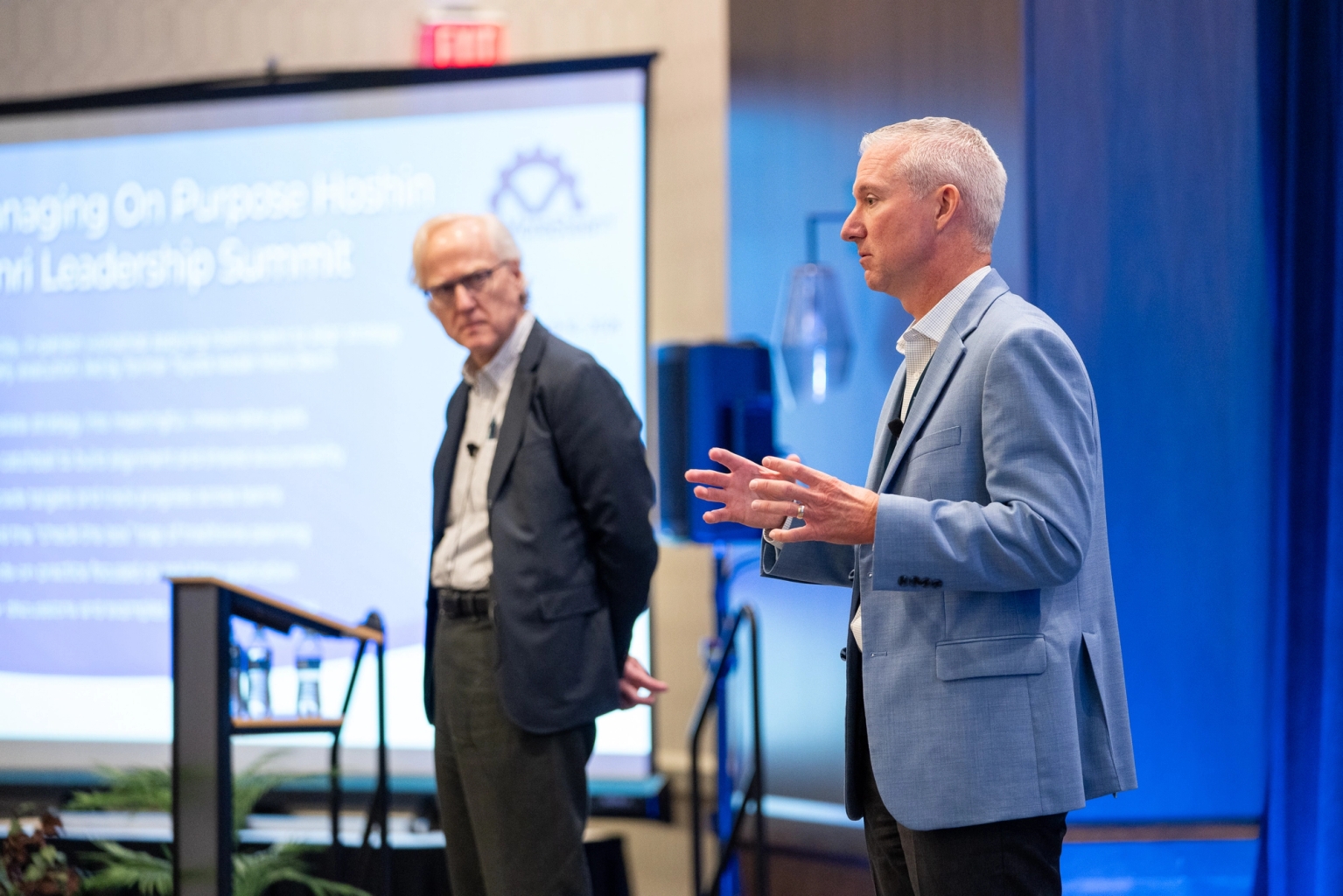
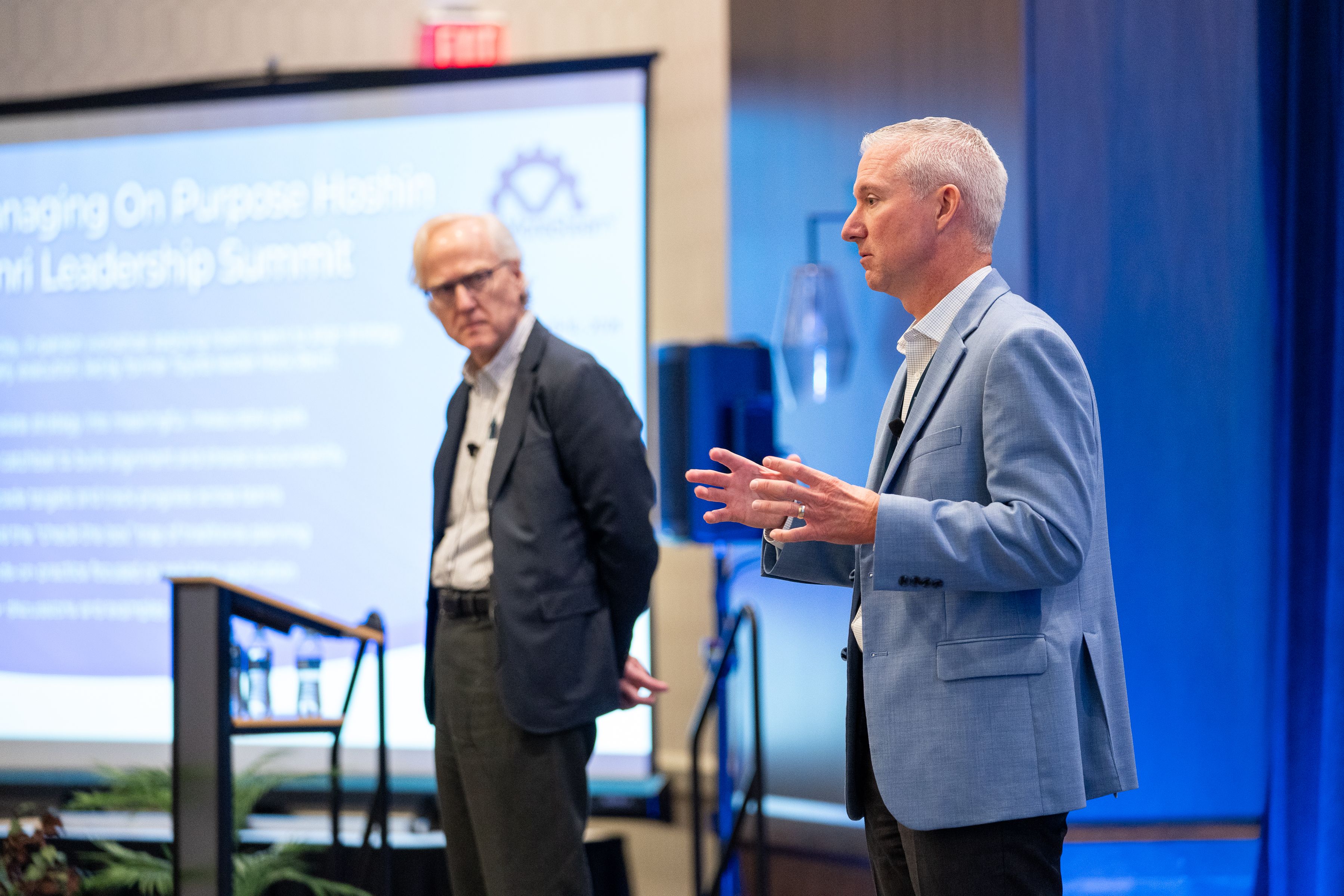
Chad Cummings & Mark Reich
Chad Cummings showed what that progression has looked like at the Cleveland Clinic. Over more than a decade, the organization introduced several approaches to strengthen strategy and alignment, including the X-Matrix, OGSM, Strategic Agenda Management, and OKRs. Each contributed something, but strategy was still often treated as an annual planning exercise. Goals remained concentrated among a limited number of leaders, improvement work was not consistently tied to enterprise priorities, and reviews focused more on reporting status than learning and problem-solving.
Through its implementation of Hoshin Kanri, Cleveland Clinic began treating strategy as an ongoing management system rather than another planning framework. That shift required more than adding new tools. The organization worked to anchor its priorities in a shared purpose, develop leaders’ capabilities, establish consistent review routines, and create a culture in which strategy shaped daily management and improvement. The experience also revealed practical lessons, including the need for simpler language, clearer expectations, and adequate time for leaders to learn and practice new behaviors.
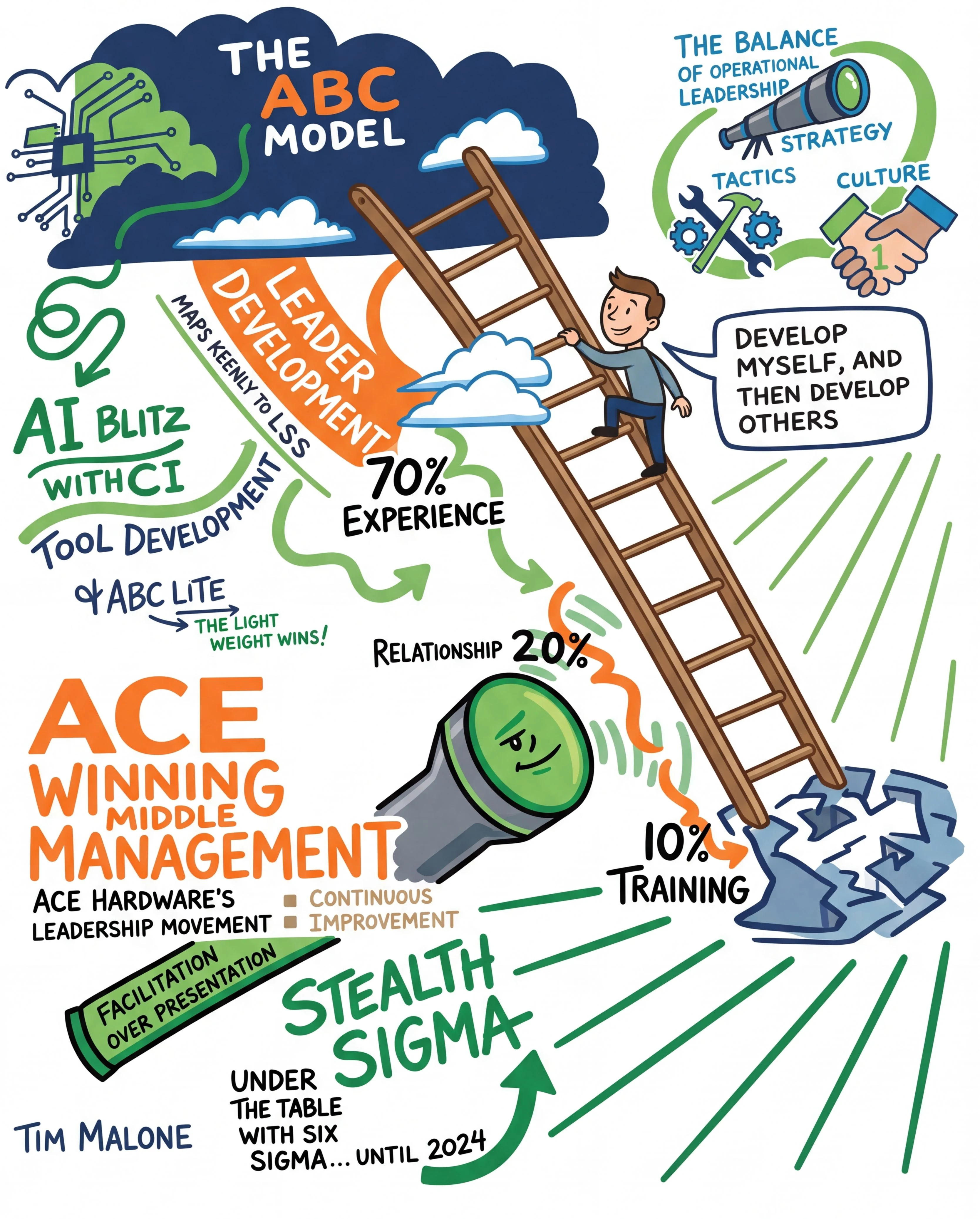
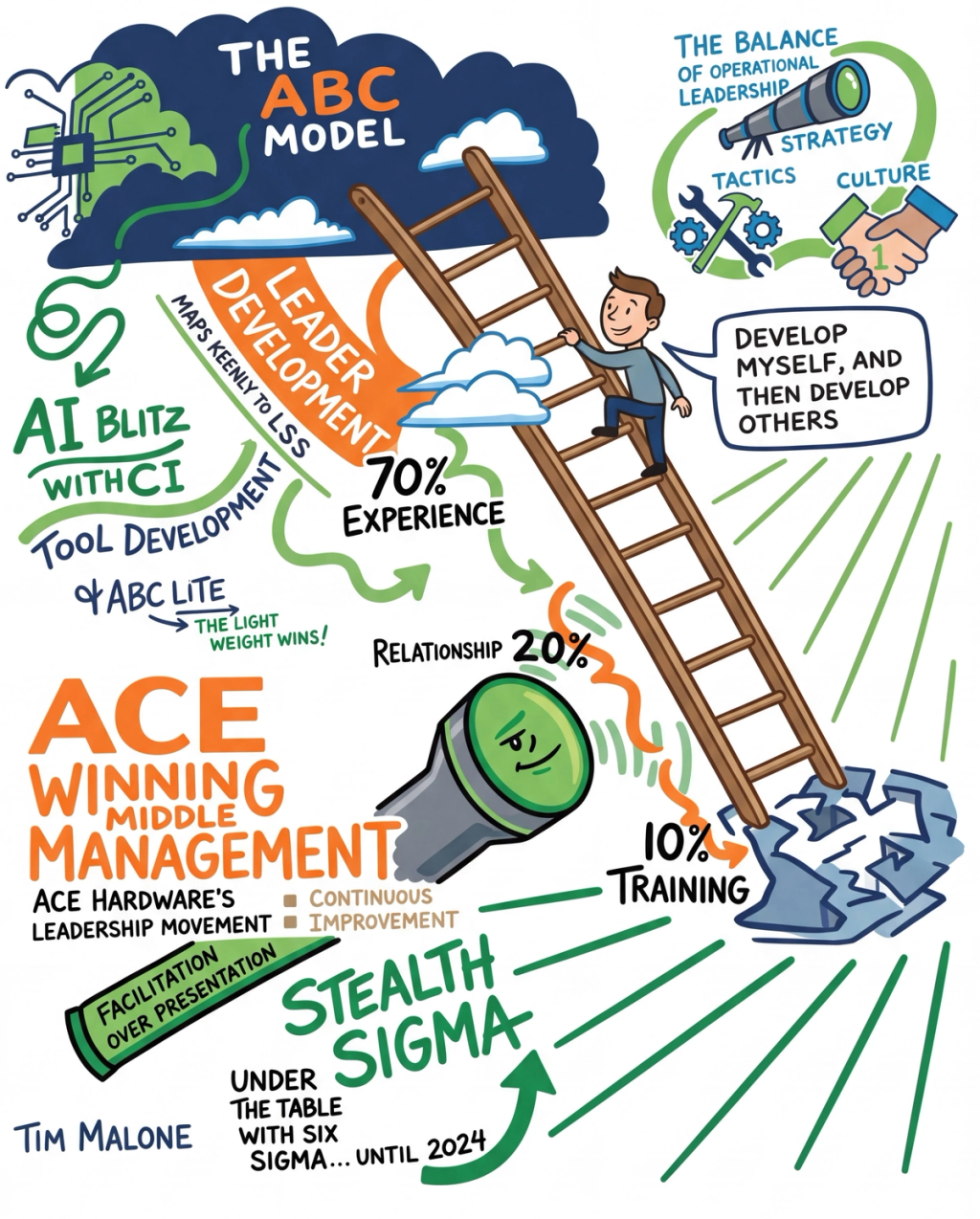
Tim Malone of Ace Hardware focused on another essential connection: the “vast and broad middle” between executive support and frontline execution. Ace’s early Lean efforts included false starts as they tried to use tools alone to change the culture, and improvement could not scale through a small group of believers. Ultimately, progress required leaders who could combine tactics, strategy, and culture: people who could accomplish the work, influence others, and then develop the next group of leaders. Strategy becomes real when people throughout the organization can connect it to the decisions, problems, and work directly in front of them.
Let Reality Improve the Plan
At most conferences, presentations concentrate on polished success stories. At BP4OpX, speakers are encouraged to talk candidly and openly about what didn’t work.
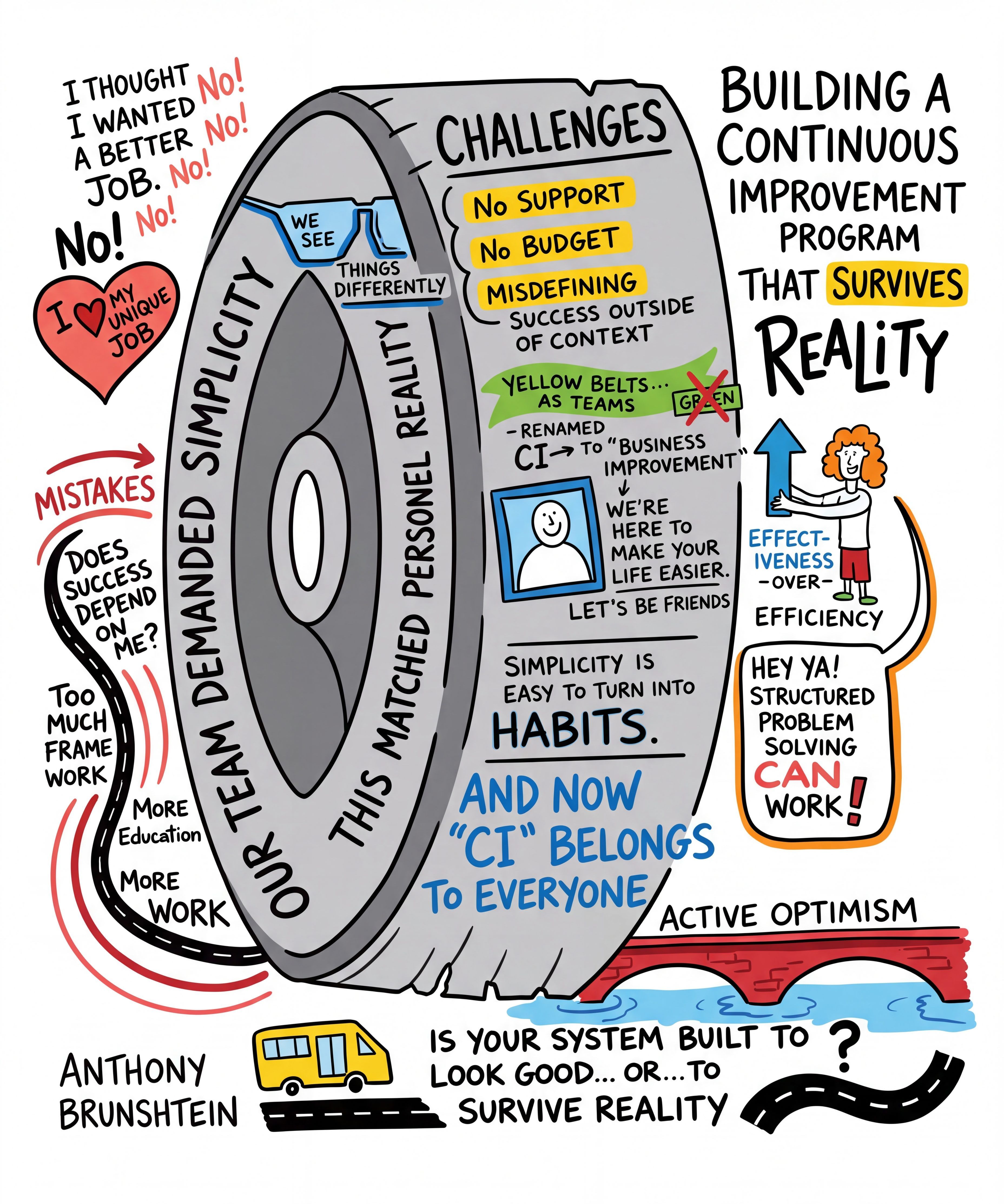
Anthony Brunshtein of Beacon Mobility described his experience developing a continuous improvement program as a cautionary tale built from good intentions. In the early stages, he believed the program’s success depended on him. Because of that, the program accumulated too much framework, too much training, and too much emphasis on efficiency. Some improvements did not address outcomes the business truly cared about.
As a result, Anthony and team reframed the work. Instead of building a continuous improvement program, it began building a business capability.
That meant using a framework flexible enough to accommodate operational differences, developing people through real improvements rather than certificates alone, recognizing teams for the results they created, and connecting efficiency to strategic impact. Most importantly, improvement needed to stop belonging solely to the CI team. The goal was not to build a system that merely looked good, but one that could “survive reality.”
Similar encounters with reality appeared throughout the conference. Amazon outgrew its homegrown database and discovered that a generic project management tool could not support the organization’s Lean Six Sigma methods, financial calculations, reporting requirements, and project lifecycle. Finding the right approach required recognizing that the first and second systems were no longer adequate.
Cleveland Clinic treated its initial Hoshin implementation as an experiment, identified gaps in language, practice, standards, information, and accountability, and used those lessons to shape the next stage.
Nationwide Children’s did not assume that a successful simulation would translate perfectly into practice. The team piloted its ideas, listened to employees, and changed the design. As Nguyen and Klein reminded attendees, what George Box once said, "All models are wrong, but some are useful." A model helps teams learn; it does not eliminate the need to observe what happens when an idea meets the real world.
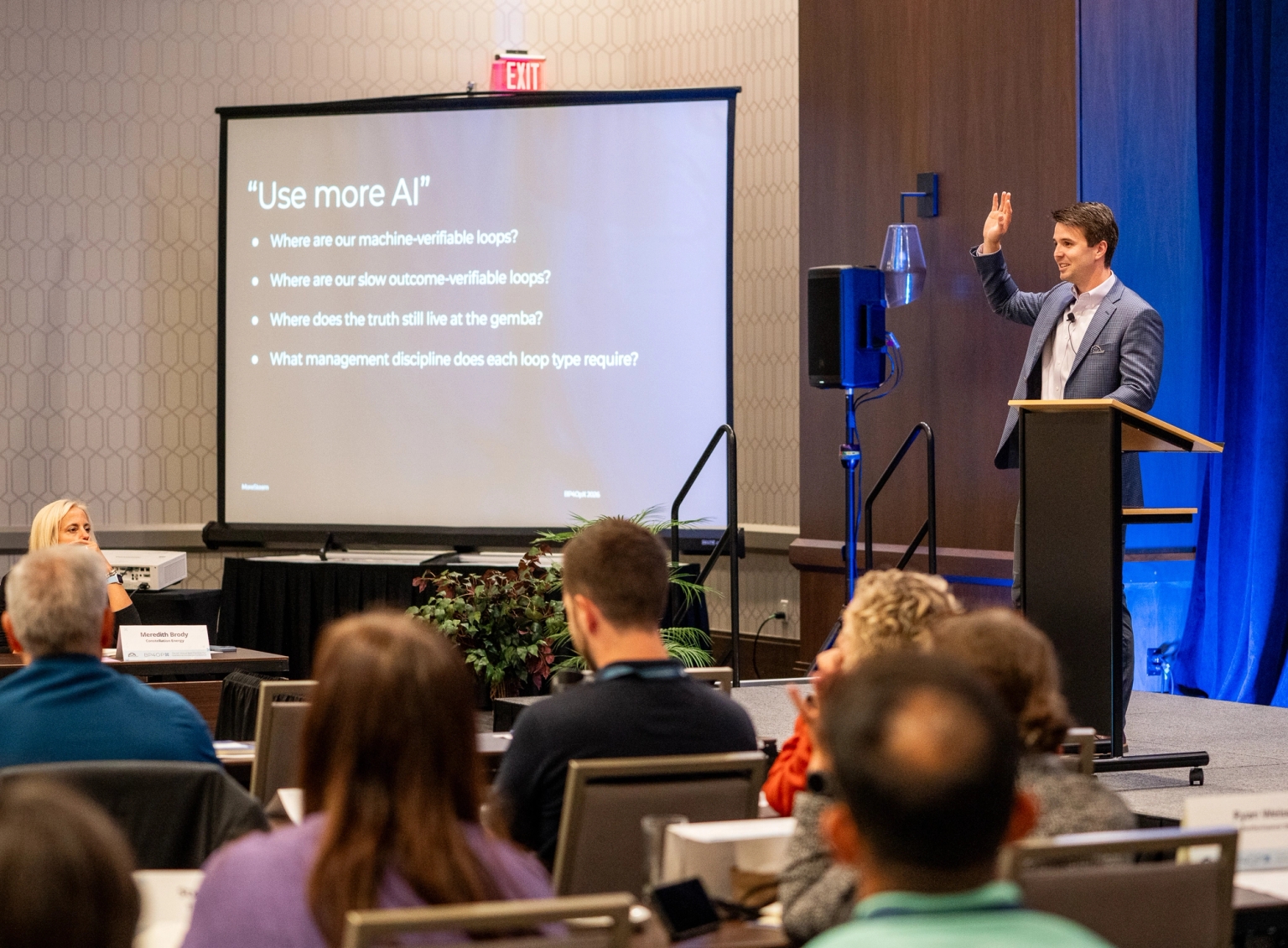
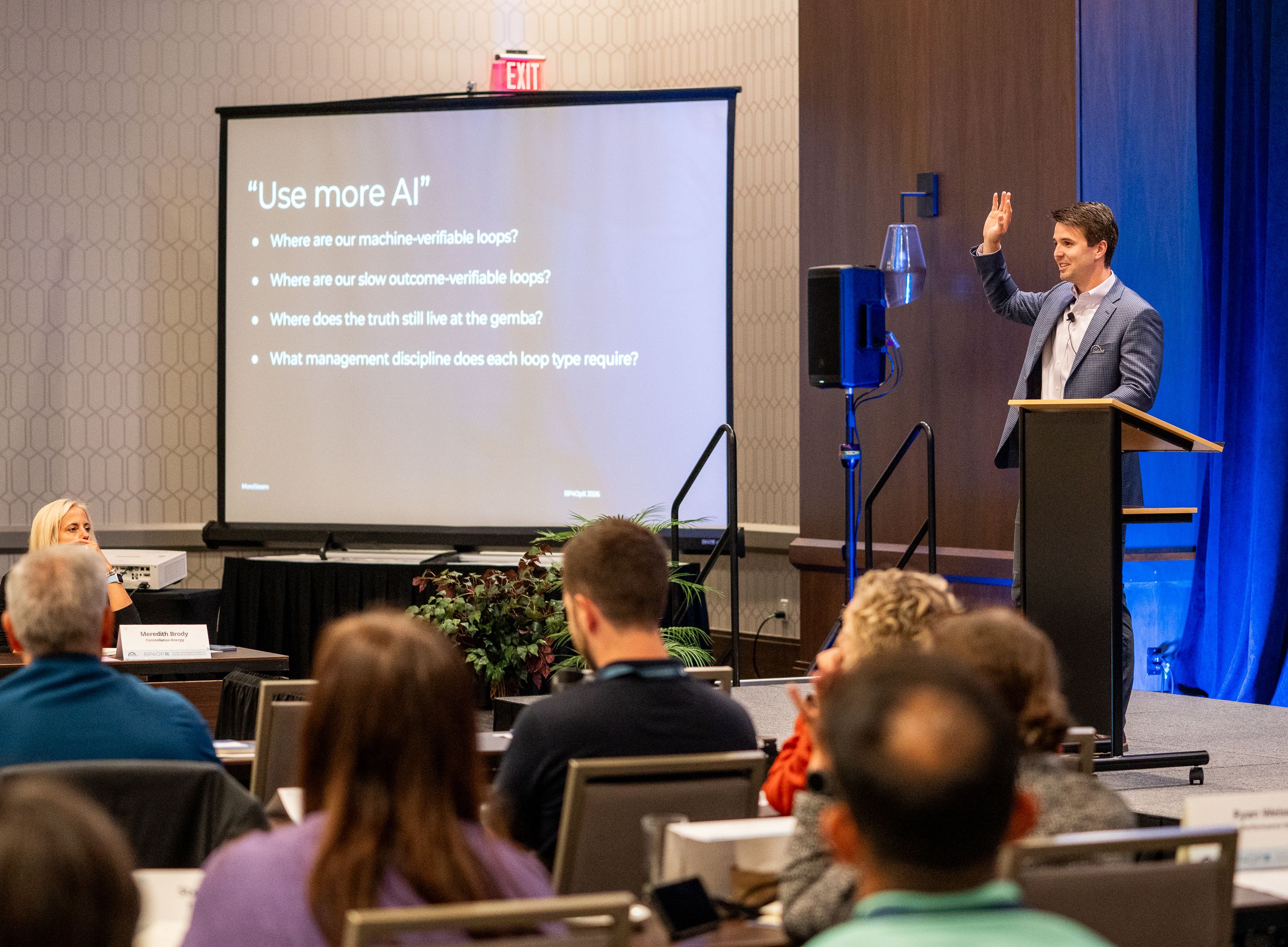
Xander Hathaway presenting at BP4OpX 2026
Even the conference’s discussion of Agentic AI returned to verification. Xander Hathaway explained that a capable model becomes useful when it operates within a reliable loop that includes context, evidence, feedback, and a way to determine whether the result is correct. When the truth lives at the gemba, human observation and judgment must remain part of that loop. Across all these examples, methodologies, and models provided structure, but meaningful learning began when that structure encountered reality.
Build the Capability to Continue
The final connection was the need to build an organization’s capacity to continue improving without relying on a single expert, team, or leader to carry the work forward. Beacon Mobility shifted toward enterprise ownership, while Ace Hardware focused on leaders developing other leaders. The coaching panel described a coach as a thought partner who helps others solve problems independently, and Hoshin Kanri gave people at every level a role in understanding and improving the work.
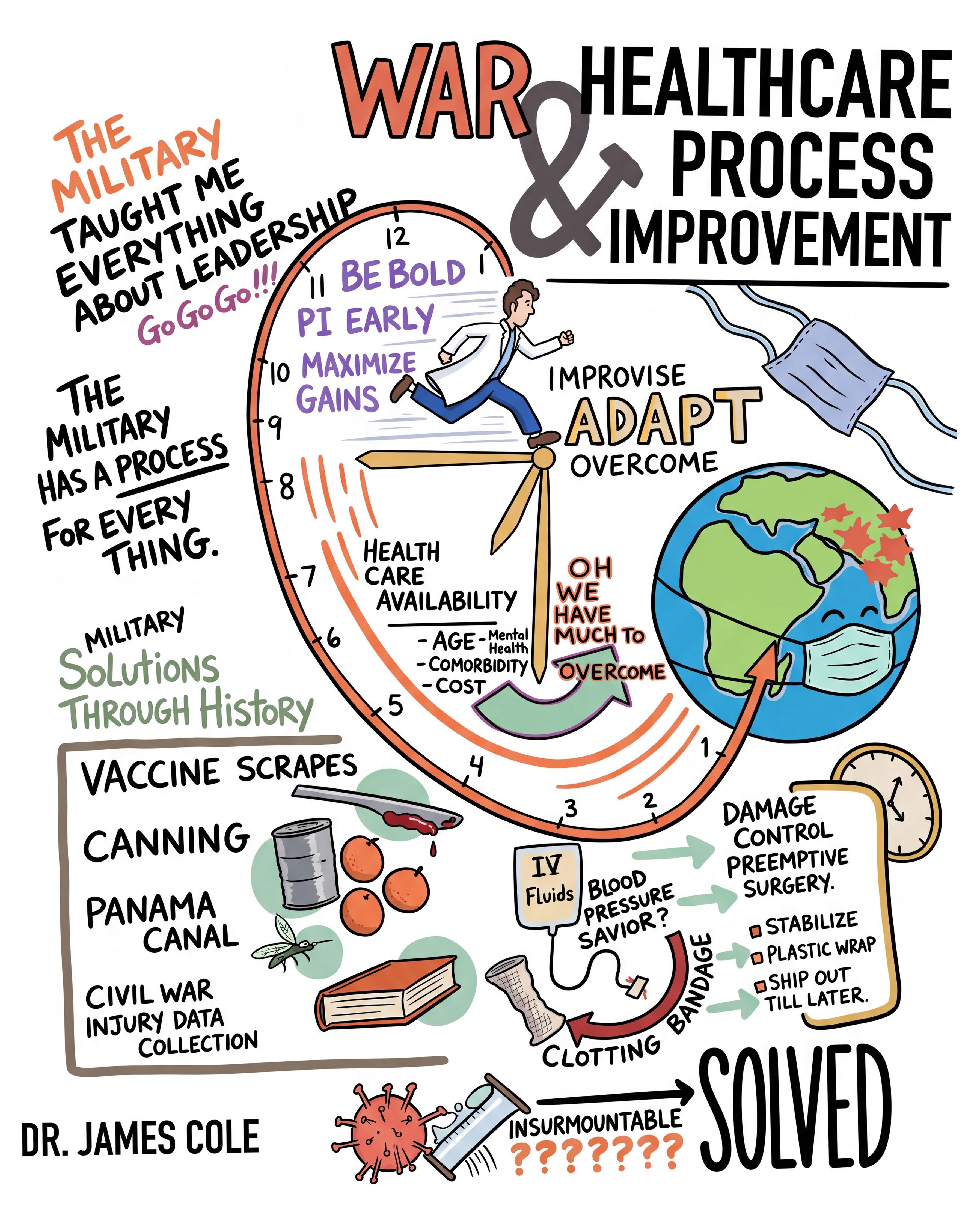
Dr. James Cole closed the conference's presentation portion by demonstrating what that collective capability can accomplish under difficult conditions. Drawing from his experiences in military medicine and healthcare leadership, he shared stories involving battlefield trauma, COVID-19, hospital capacity constraints, and clinical processes once considered too entrenched to change.
At UW Health’s Northern Illinois Region, a cross-functional team confronted a hospital-throughput problem that initially seemed insurmountable. The hospital was operating at maximum capacity, patients were waiting in the emergency department for beds, and leaders faced the possibility of diverting ambulances or canceling surgeries.
The team studied the current state, examined variation, established shared measures, and introduced multidisciplinary leadership huddles to improve real-time coordination of care. Despite initial predictions that the goals were impossible or unsafe, the hospital reduced length of stay, while readmissions and mortality also decreased. Let that sink in for a minute.
Cole’s message was about grit, not blind adherence to an original plan. His stories emphasized the ability to organize, observe, challenge established practices, and respond to new conditions.
Staying the course does not always mean keeping the same plan. Sometimes it means remaining committed to the problem while adapting the way you approach it.
Sharing Makes Improvement Stronger
No two organizations represented at BP4OpX were solving exactly the same problem. Their speakers came from healthcare, retail, transportation, technology, legal services, hospitality, finance, and other fields.
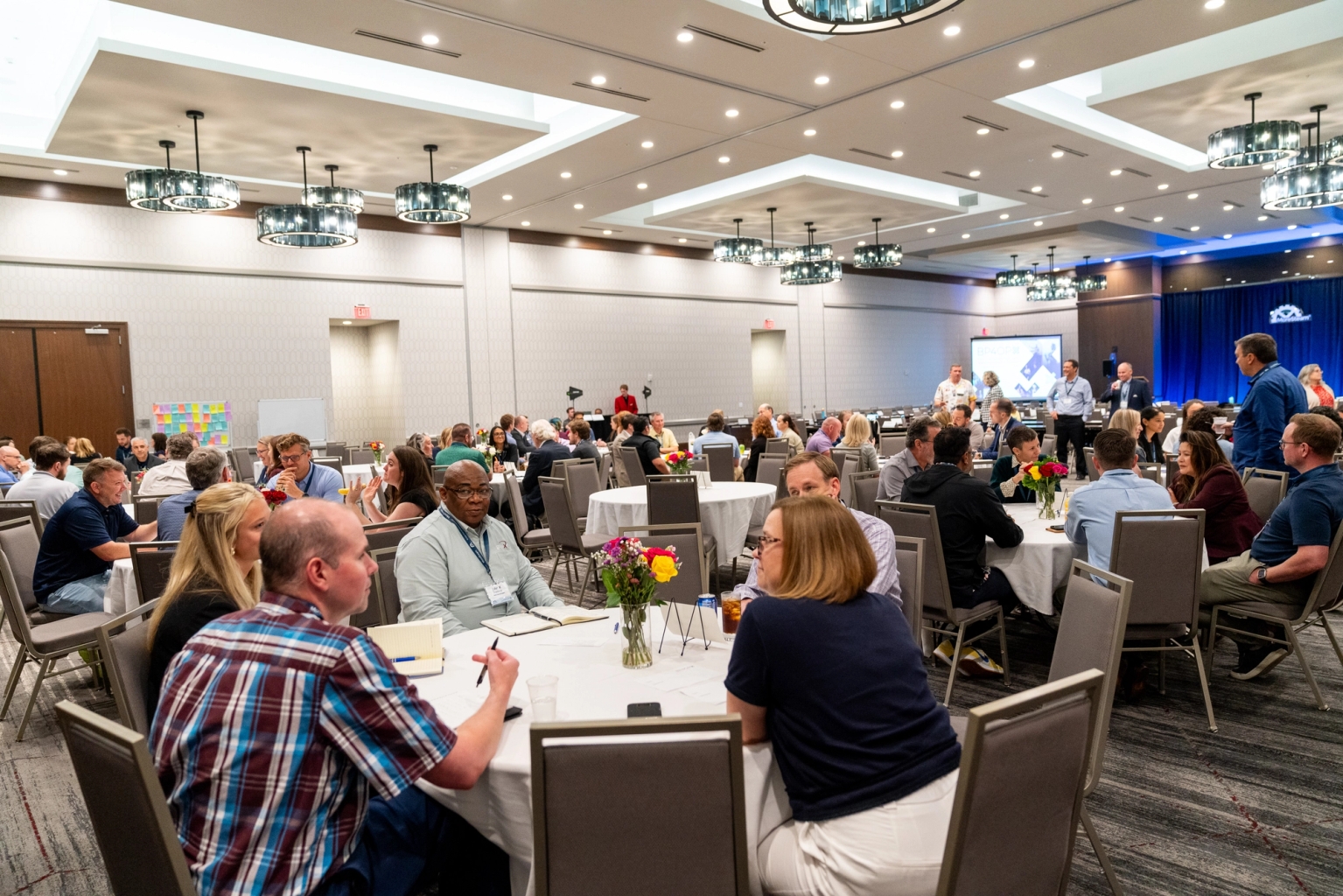
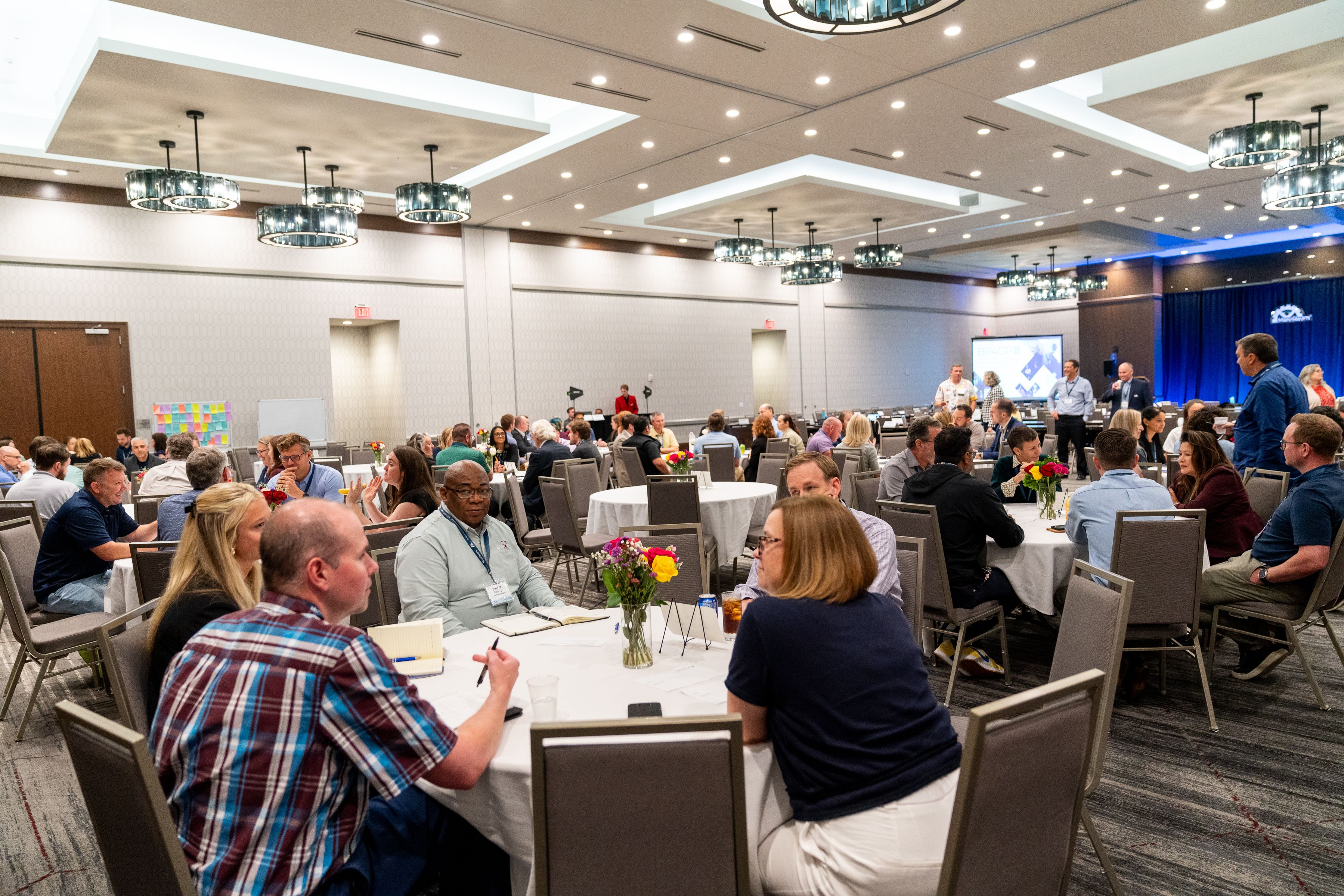
Discussion groups at BP4OpX 2026
Yet the same needs continued to surface: make the system visible, help people understand why the work matters, involve them in shaping change, connect strategy to daily decisions, and remain willing to learn when the first plan meets reality.
The finished illustrations made those connections easier to see. So did the willingness of speakers to share more than ‘board-room ready’ results. Stories about resistance, false starts, unintended complications, and revised plans gave attendees something that success metrics alone can never provide: an opportunity to learn from the full improvement process, including failures, missteps, and lessons learned. A win can offer others a model, while a failure can provide a warning, inspire a better question, or give someone permission to try again.
That is why bringing operational excellence practitioners together matters. When people make their work visible and share it honestly, the lessons from one organization become part of a much larger capacity to improve.
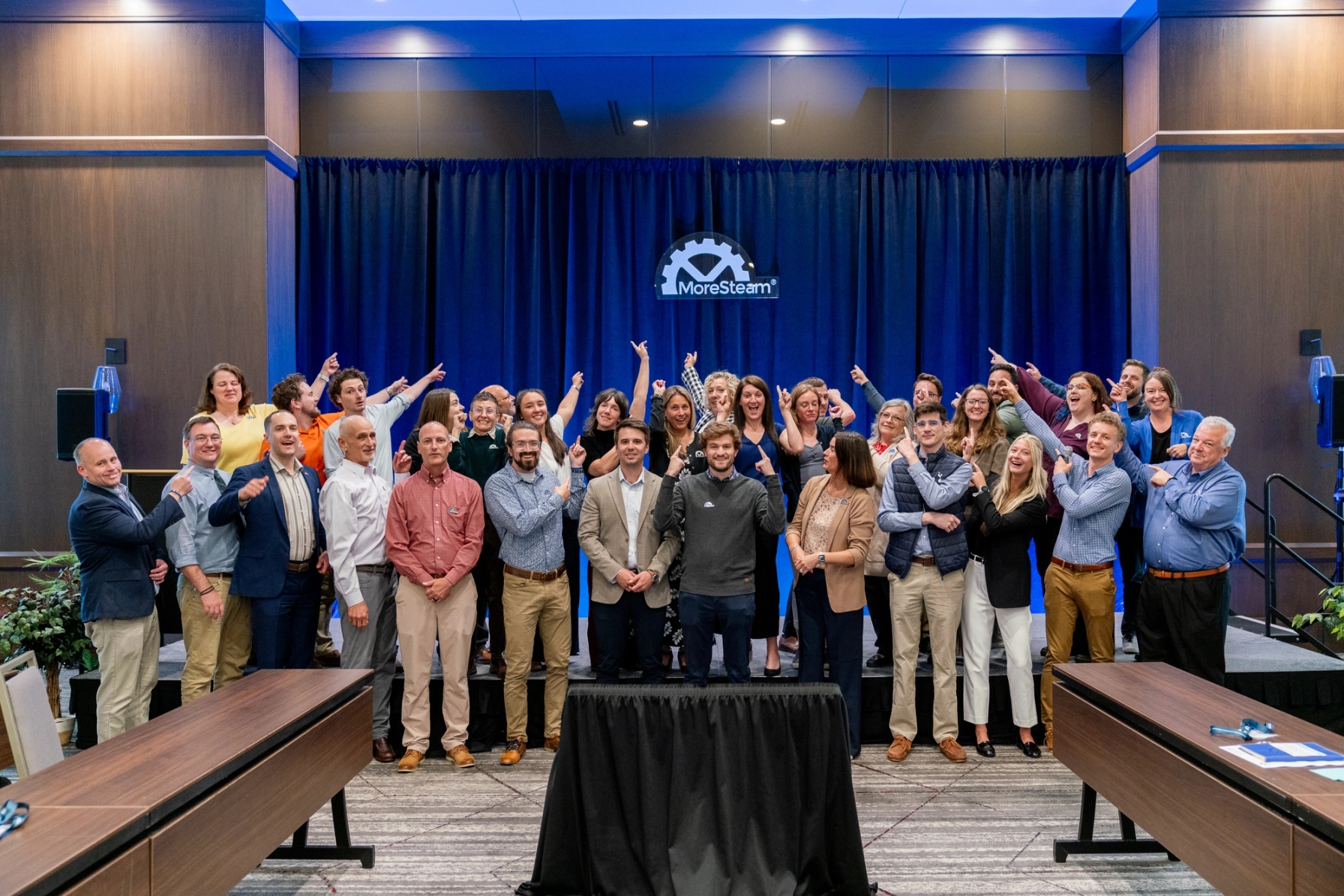
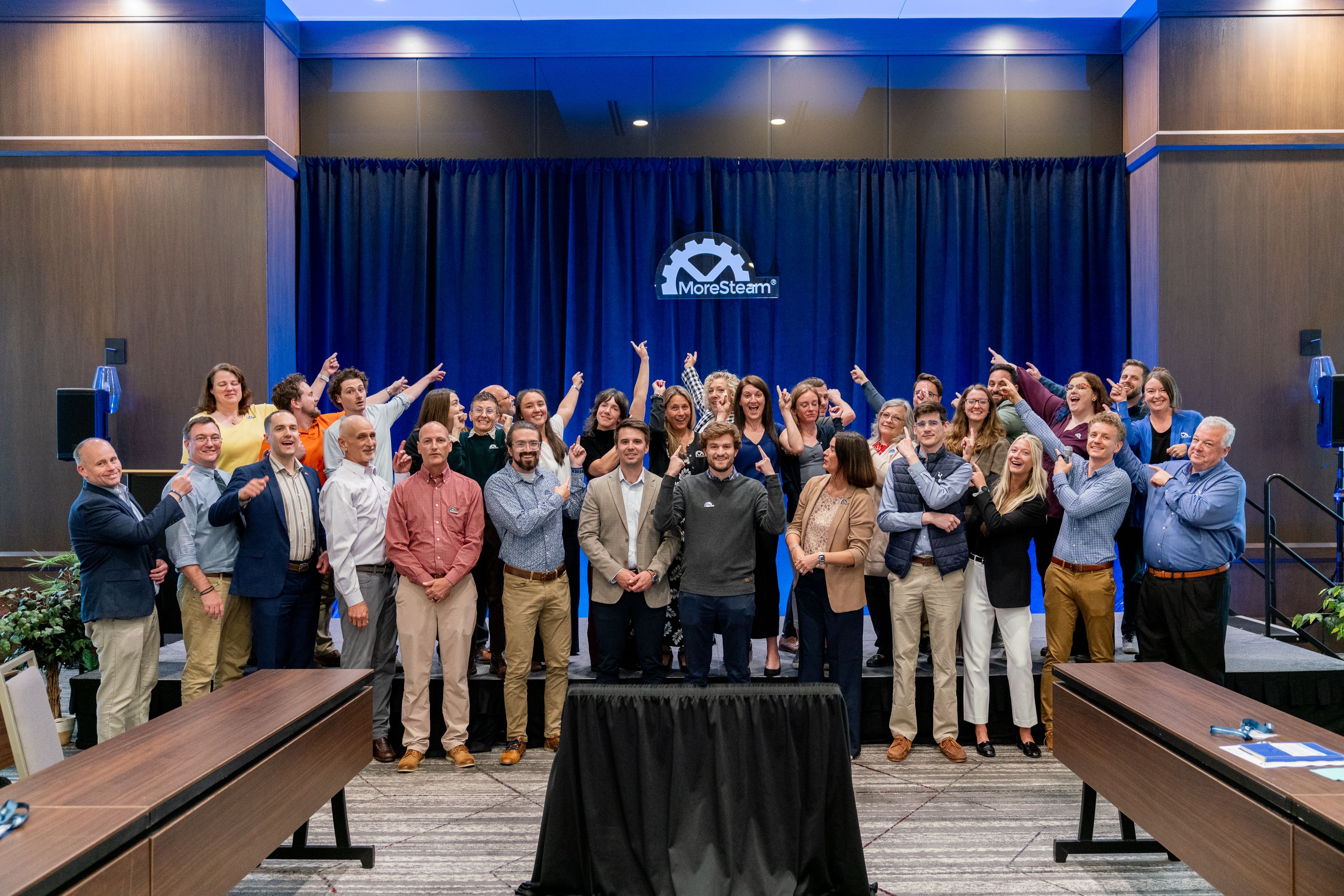
MoreSteam Team at BP4OpX 2026