Hoshin Kanri (Strategy Deployment)
Description
Hoshin Kanri is an enterprise-wide strategic planning and management framework that aligns long-term vision with daily operations. It does this by cascading strategic goals down through every level of the organization — with each level translating those goals into concrete actions, pushing back with input and constraints, until strategy and execution are genuinely in sync.
The term Hoshin Kanri comes from Japanese, where hoshin can be translated as “compass” or “direction,” and kanri as “management” or “control.” Together, the phrase refers to guiding an organization’s direction with intention and alignment.
Key Components of Hoshin Kanri
Hoshin Kanri operates through three interconnected components.
Cascading Goals & Annual Objectives
One of the hallmarks of Hoshin Kanri is the way high-level strategic goals flow down through every level of the organization. Leadership begins by defining a long-term vision and a small number of breakthrough objectives, typically three to five, that define what the organization must achieve to close the gap between its current and future state. Those breakthrough objectives are then translated into annual objectives: specific, measurable, twelve-month priorities that give each department a clear line of sight from their daily work to the organization's broader strategic direction.
Breakthrough objectives are goals that cannot be achieved through incremental improvement alone — they represent a fundamental shift in organizational performance. They help bridge the gap between current state and future state.
Catchball
Catchball is the structured dialogue process through which Hoshin objectives are tested, refined, and ultimately owned across the organization. Rather than issuing directives, leaders propose draft objectives and pass them to the teams responsible for execution. Those teams assess feasibility, identify resource constraints, and return the objectives with grounded feedback. This exchange repeats until the plan is both ambitious and achievable.
Catchball operates both vertically, between organizational levels, and horizontally, across functions and departments. The horizontal dimension is particularly critical, as it helps break down silos and ensure cross-functional collaboration. The process surfaces the interdependencies and competing priorities that cause strategic initiatives to stall when functions like finance, operations, HR, and marketing are not working from aligned goals. As Mark Reich writes, catchball is "a process that minimizes the functional barriers of an organization to improve the teamwork of leaders across departments."¹
The result is a plan that people at every level have helped to build, one grounded in reality and supported by genuine ownership.

Daily Management
Hoshin Kanri does not operate in isolation; it only succeeds with use of an organization's daily management system. Hoshin identifies the few critical breakthrough objectives that require focused, organization-wide effort, but without daily management discipline, even well-designed strategic initiatives tend to advance in bursts and stall. Daily management provides the structured routines, visual performance indicators, and short-cycle reviews that keep objectives alive between planning cycles.
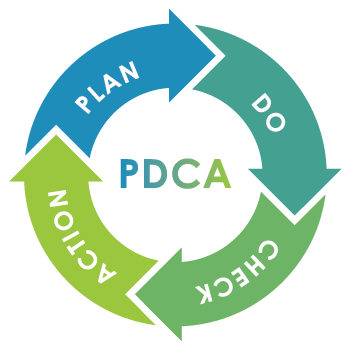
Consider a manufacturing team that is looking to achieve a targeted reduction in defect rates as part of a Hoshin initiative. Without daily management, that improvement can quietly erode as new priorities emerge and the metric stops being reviewed. With it, defect rates stay visible on the shop floor, supervisors respond to drift quickly, and the gains hold over time.
Because they serve different purposes, each system reinforces what the other cannot do alone: Hoshin changes the business, daily management runs it, and sustainable performance improvement requires both.
Signs Your Organization Is Ready for Hoshin Kanri
Hoshin Kanri is best suited for organizations ready to align their entire structure around a small number of strategic priorities. It works best when senior leadership is committed to an ongoing, multi-year planning cycle rather than using it as a one-time initiative.
- When incremental process improvements are no longer sufficient, and the organization needs to achieve a significant strategic shift
- When frontline activities feel disconnected from executive leadership's strategic vision
- When cross-functional collaboration is breaking down, and departments are operating in silos
- When the organization lacks a consistent, shared framework for setting and reviewing strategic priorities
Common Hoshin Kanri Missteps
- Using it as a substitute for a daily management system or localized process improvement work
- Getting so caught up in the planning process that documentation becomes the goal rather than the results
- Waiting for a perfect plan before taking action, when a good plan executed well will outperform a perfect plan that never launches
- Leadership is failing to sustain the management discipline required to keep Hoshin Kanri active after the initial planning cycle.
The Hoshin Planning Cycle
Hoshin Kanri follows a continuous annual cycle with four phases:
- Vision and Breakthrough Objectives: Senior leadership defines a long-term vision and identifies a small number of breakthrough objectives to be achieved over the next 3 to 5 years.
- Annual Objectives: Breakthrough objectives are translated into specific, measurable priorities for the current fiscal year.
- Cascade and Alignment Through Catchball: Using catchball, annual objectives are deployed through every level of the organization. Rather than receiving a plan from above, teams actively participate in shaping it, providing input, surfacing constraints, and translating corporate priorities into local plans and metrics that reflect what is actually achievable in their area. By the time objectives are finalized, every level of the organization is invested in the outcome.
- Review, Adjust, and Learn: Progress is reviewed regularly, plans are refined based on execution, and lessons are captured to inform the next cycle. In a mature Hoshin system, strategy is treated as a hypothesis that execution either confirms or challenges.
A Brief Example in Practice
Note: This is a simplified illustration of a complex, ongoing process.
A regional restaurant chain with 70 locations was struggling with two persistent problems: too many food refires and high kitchen staff turnover. Leadership had named both as priorities, but neither was improving. General managers were focused on guest satisfaction, kitchen teams were focused on surviving service, and regional managers stretched across ten or more locations had little bandwidth for sustained oversight. Finance wouldn't approve training budgets, and operations were consumed by promotional initiatives. Critically, nobody at the frontline had been consulted on whether these goals were even achievable. Everyone was working hard, but not toward the same thing.
After analyzing the current state of the business, leadership defined a three-year vision and three breakthrough objectives to achieve it: break into the East Coast market, reduce food refires by 20%, and improve kitchen staff retention by 5%. For Year 1, those breakthrough objectives were translated into focused annual objectives: establish an East Coast market entry plan, achieve a 7% reduction in refires, and improve retention by 2%.
With annual objectives set, the catchball process began. The East Coast expansion touched marketing, operations, and finance simultaneously. Marketing identified three target markets and began scoping brand awareness needs. Operations flagged that the existing supply chain infrastructure would not support new locations without additional vendor contracts. Finance confirmed that the capital required would affect budgets across multiple departments. Through catchball, the three teams aligned on a phased entry plan, shared milestones, and a realistic budget.

The refire and retention objectives told a similar story. The kitchen operations team identified inconsistent ticket communication as a primary driver of refires and launched a targeted order accuracy project, with weekly refire rate as its metric. HR worked with operations to identify where turnover was highest and why, then partnered with finance to build a training budget tied directly to projected savings from reduced turnover.
Daily management brought the plan to life on the kitchen floor. A visual scoreboard tracking refires was installed in each kitchen, making performance visible to every team member during every shift. Brief daily huddles before dinner service gave staff a chance to review menu changes and flag concerns before they became problems.
The plan that emerged was one that every level of the organization had helped shape and could actually execute. Within the first year, the organization had a shared planning framework, measurable targets at every level, and cross-functional alignment to sustain them.
From Framework to Practice
Understanding Hoshin Kanri as a framework is the first step. Putting it into practice across an organization requires a deeper fluency with its tools, cycles, and the judgment calls that come with real deployment.
MoreSteam's Hoshin Kanri Essentials course walks through the full planning cycle, from defining a long-term vision and breakthrough objectives to executing through daily management and closing the loop with disciplined review. The course includes worked examples, downloadable X-Matrix and A3 templates, and optional AI-powered exercises for personalized feedback.
Related Tools
- PDCA
- A3
- Kaizen Events
- DMAIC
- Project Charter
References
Reich, Mark. Managing on Purpose. Lean Enterprise Institute, March 1, 2025. ISBN 978-1-934109-05-2. p. 50.