Veritext Legal Solutions is the nation’s leading provider of deposition and litigation support services, trusted by law firms, corporations, and government agencies to deliver precision and reliability at every stage of the legal process. In an industry where the margin for error is essentially zero and client expectations are exceptionally high, quality serves as the foundation for continuous improvement.
Achieving high-quality service at scale starts with people. At Veritext, technology plays a critical role, but it is not the driver of improvement. People are. Human-powered technology, the concept that better tools don’t replace human judgment, they strengthen it, is central to Veritext’s approach to continuous improvement. But like any philosophy, it only matters if it shows up in how the work actually gets done.
At Veritext, that shift began with leadership and with a clear vision for how to make improvement part of everyday work.
A Vision for Better Work
When Joe Baker joined Veritext as Chief Operating Officer, his background in Lean Six Sigma shaped his vision for Veritext. While pursuing his Black Belt certification, Joe saw that the organization had very talented people but lacked a shared language and structure for consistent improvement. This realization set the stage for embedding continuous improvement at Veritext.
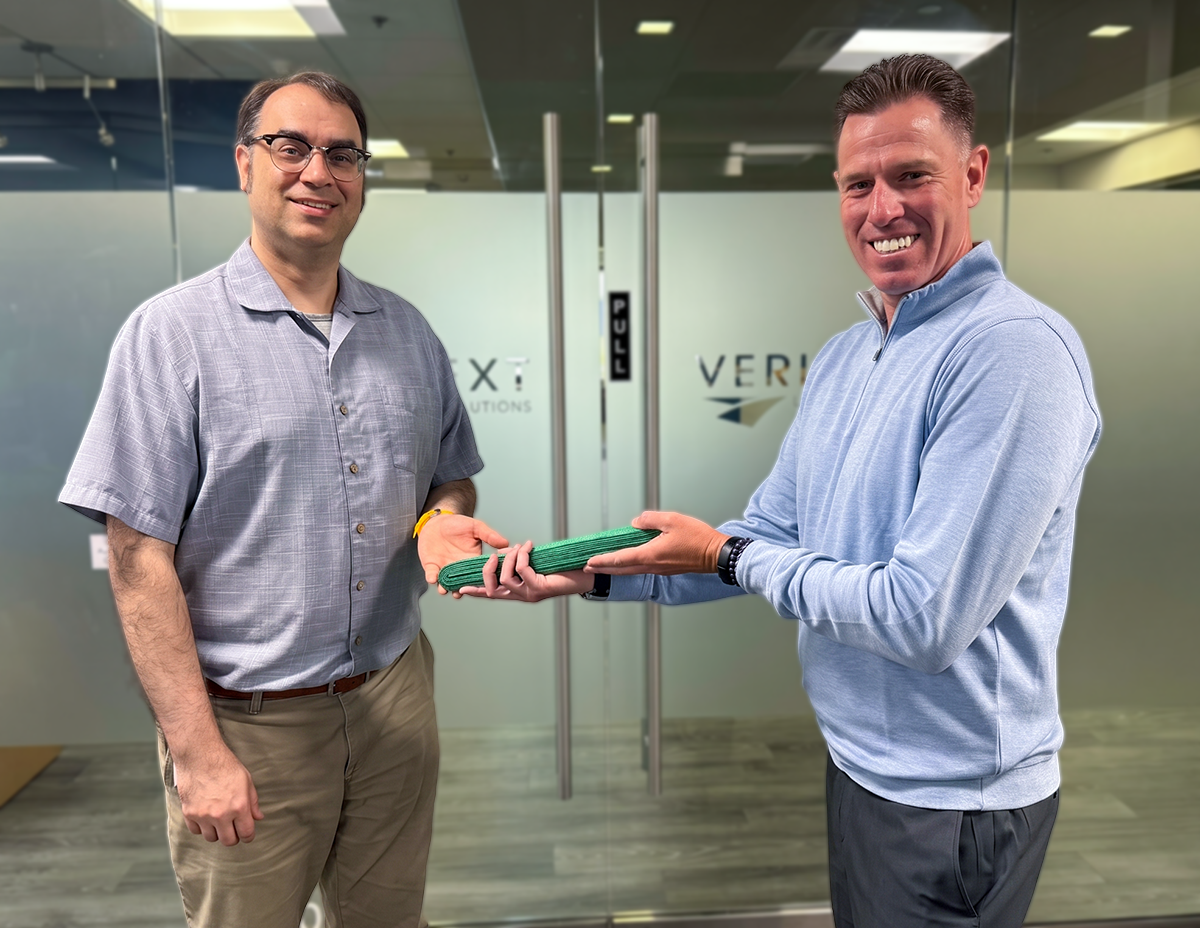
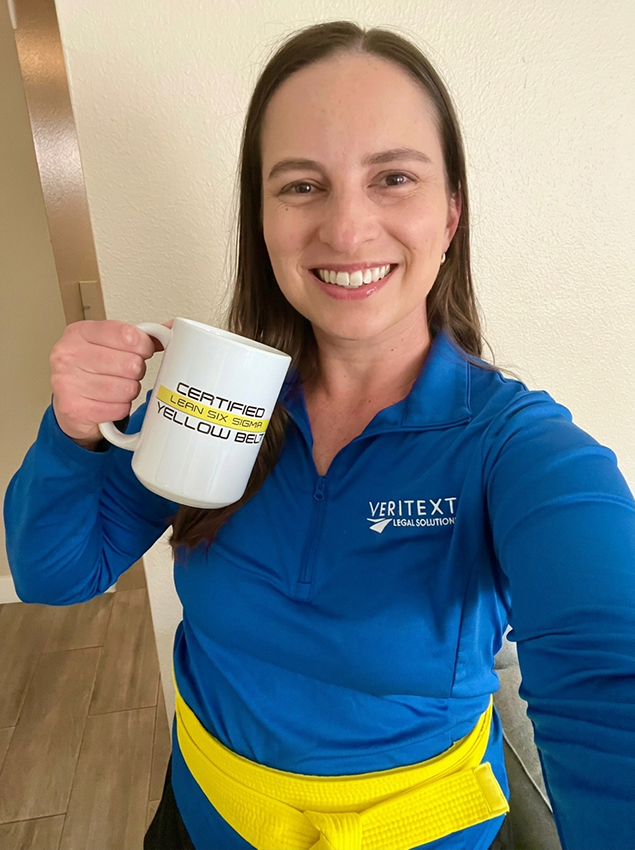
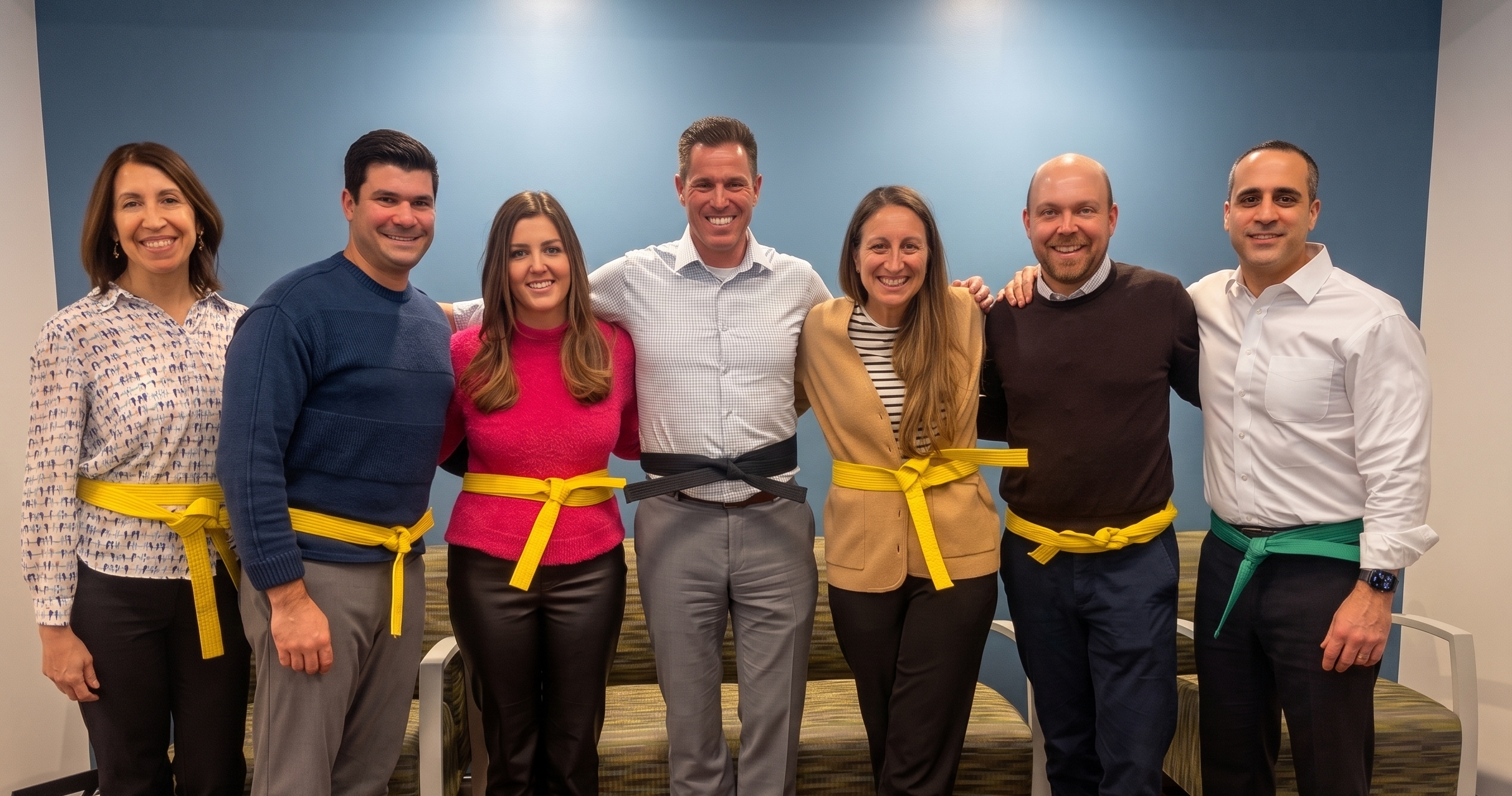
The program launched with a pilot cohort of Green Belts drawn from Veritext’s project management professionals, individuals already wired for structured, cross-functional work. From that small beginning, the program expanded deliberately. Directors were trained in Yellow Belt in cohorts. White Belt programs were made broadly available, creating a common foundation of Lean vocabulary across the organization. As of today, Veritext has 100 certifications across belt levels, with several senior leaders actively working through Black Belt coursework.
“We started with voluntelling the right people. What’s happened since then is that people are coming to us asking, ‘Is there anything for me? What can I do?’ They are looking for opportunities themselves”. — Paul | Director of Project Management Optimization, Veritext Legal Solutions
Developing Capability, Not Just Pushing Training
Veritext took a deliberate approach to where it would invest. Rather than push everyone toward the highest certification, the program aimed to match the right training to the right role. Most directors have Yellow Belts. Managers and individual contributors are working through White Belts. A smaller group of Green Belts handles more complex, data-intensive projects. Black Belts serve as program stewards and coaches.
It is a structure that reflects the day-to-day reality of Veritext’s transactional, service-driven environment, where the most meaningful improvements often come not from months-long projects but from a frontline leader who pauses before making a decision and asks: what does the data say?
“The Yellow Belt is a really good fit for a lot of what we’re doing here,” one senior leader notes. “Most of the value right now is coming from people who’ve been equipped with Yellow Belt skills and are going out and applying them every single day.”
From Instinct to Evidence
Perhaps the most consistent theme across every Veritext voice is the shift from gut-driven decisions to grounded, data-supported ones. And at Veritext, that shift is being felt across functions and up and down the org chart.
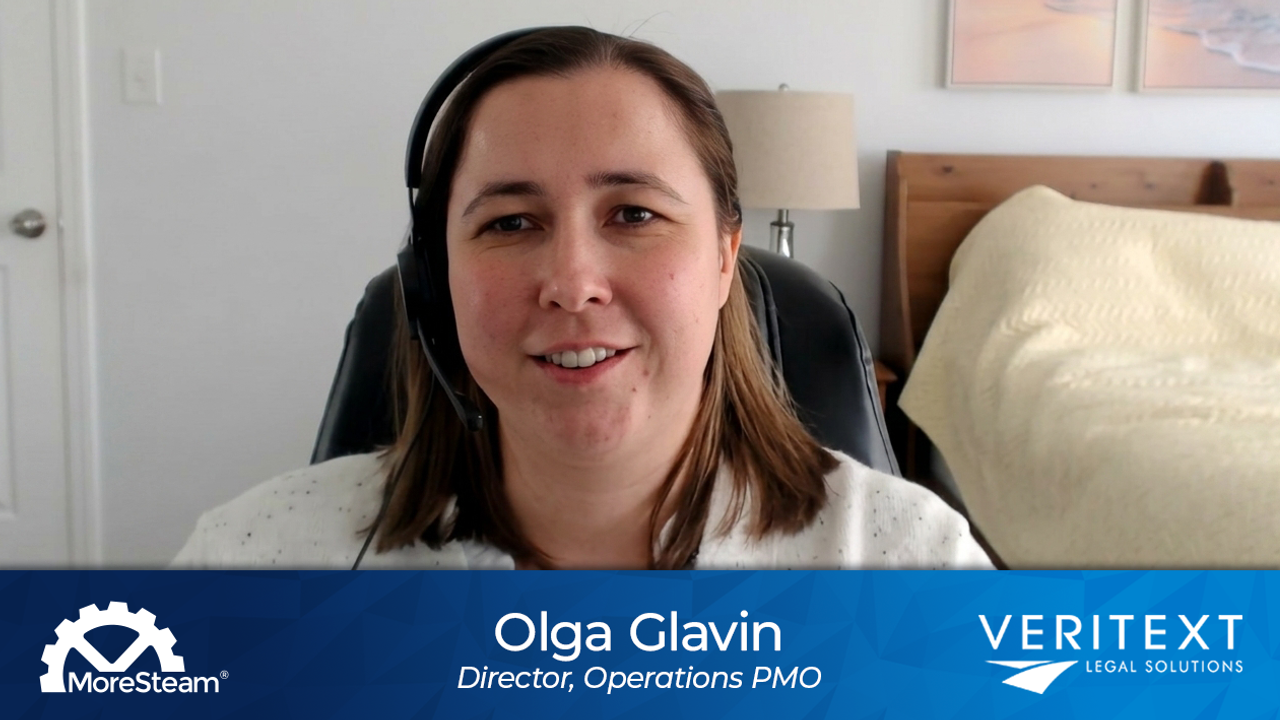
Olga, Director of the Operations Project Management Office, describes the transformation in her own working style. Before Yellow Belt training, she would look at a process, gather qualitative feedback from stakeholders, and work towards a solution. Now she is able to couple what the data says with what she hears from people and the data leads to a richer understanding of what is really happening. “In the past, I would receive feedback about a process, but in reality, that wasn’t necessarily what was happening on the ground. Now, before the meeting is even scheduled, I pull billing reports, review and analyze them, and use that structure to guide the conversation. It’s a little bit less of ‘tell me what your current process is’ and a little bit more of ‘this is the story the data tells.’” — Olga | Director, Operations PMO, Veritext Legal Solutions
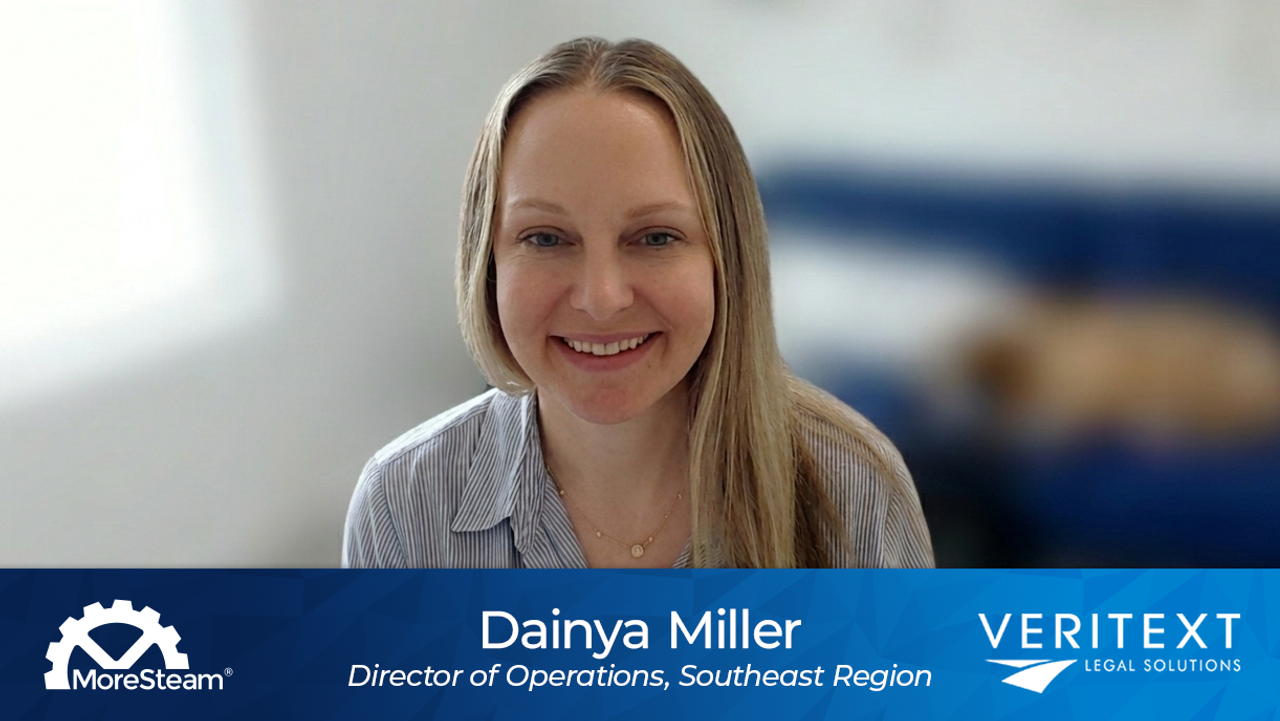
For Dainya, Director of Operations for the Southeast Region, a data-driven approach turned an eight-month-old frustration into a two-week fix. Her team experienced a 40-second delay every time they opened jobs for one of Veritext’s largest clients. The lag seemed minor in isolation, but it compounded relentlessly across thousands of daily interactions. When Dainya ran the numbers, her team was losing 32 hours per week just waiting for jobs to load.
“When I sent those numbers to our RVP, the issue was fixed within two weeks. Something that had been going on for roughly 8 months. [The data] helped to move it up the list because they saw how big of an impact it would have on the company as a whole.” — Dainya | Director of Operations, Southeast Region, Veritext Legal Solutions
Going to the Gemba
Michael, Director of Video Production, has been with Veritext for 18 years. He watched the video department grow from a team of three to a department of 50 direct and indirect reports. As the operation scaled, the informal feedback loops that worked in a small team, like seeing problems firsthand and hearing from frontline workers in the hallway, quietly disappeared, a casualty of rapid growth and a remote-work environment.
Yellow Belt training gave him a framework for what was missing: the Gemba walk—the practice of observing work firsthand. While previously part of in-person collaboration, going remote had rendered it less common.
Reviving Gemba walks in a virtual setting was just the beginning. Michael led a comprehensive effort to map Veritext’s entire video production workflow. This is a 20-step process spanning three major subprocesses: MPEG video production, video synchronization, and final QC, archive, and delivery. For the first time, the team captured cycle times at each step. They built a data-informed picture of where bottlenecks were forming and where resources needed to flex.
The results were substantial. In some process areas, the restructured workflow reduced cycle times by 30-40%. But perhaps more striking was the scale of change this structured approach supported: Michael and his team simultaneously merged two formerly separate video operations in New Jersey and California into a single, unified team, creating consistent standards and workflows for clients no matter where their proceedings were recorded.
“If you go to a Starbucks in New Jersey and you go to a Starbucks in Washington, you expect the same cup of coffee. Our clients expect the same products whether it’s produced out of California, New Jersey, or Florida.” — Michael | Director of Video Production, Veritext Legal Solutions
As workloads increased after the integration, employee feedback pointed in a surprising direction. People reported feeling less pressure, not more. By narrowing each team’s focus to specific, clearly defined steps and trusting downstream teams to handle the rest, leaders removed the cognitive overhead of trying to own everything at once. That’s an important benefit that isn’t easily quantifiable.
Structure That Sticks
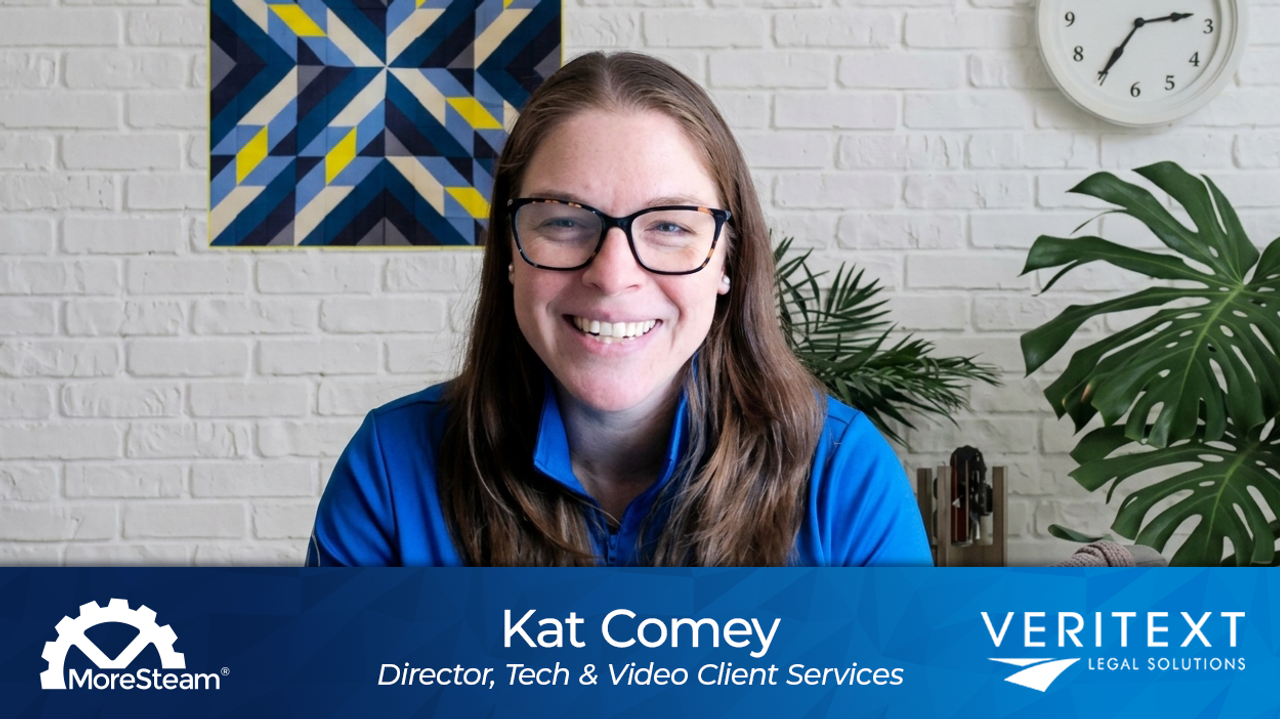
Kat, Director of Tech and Video Client Services, came to Green Belt training as someone already comfortable with structure and data. What surprised her was how deeply the methodology took root.
Her project tackled overtime in the on-call coverage program supporting Veritext’s clients, who often work after hours and need responsive service when depositions run late or proceedings get complicated. Rather than jumping straight to a solution, she worked through DMAIC: defining the problem, measuring current performance, gathering frontline staff perspectives through Five Whys sessions, and analyzing the data before proposing a single change. The outcome of that change? Overtime was cut in half.
“I surprised myself recently by realizing I was following the DMAIC method on a completely separate project, completely unintentionally. As I was putting together a presentation and describing next steps, I realized we were deep in the Measure phase. I guess it’s ingrained in my thinking now whether I like it or not.” — Kat | Director, Tech & Video Client Services, Veritext Legal Solutions
That shift in thinking is what separates good Lean Six Sigma training from the best. The right training doesn’t produce practitioners who rigidly follow a checklist; it produces leaders who think in frameworks naturally, even when they don’t realize they’re doing it. Kat has also seen the mindset spread to her team: seven of her direct and indirect reports have now earned White Belt or Yellow Belt certifications, and at least one team member has embraced the concepts with particular enthusiasm, using the phrase “Gemba walk” in team meetings at least once a week.
“I think he really appreciated the structure,” Kat says. “It gave him a path to feel successful in implementing change.”
Centering the Client Voice
When Dainya was asked what she does today that she wouldn’t have done before her Yellow Belt training, she didn’t hesitate: it’s the voice of the client.
“I say to my teams all the time when we’re talking about a process or a challenge, ‘Let’s think about what the client needs and work backward,’” she explains. The practical payoff of this approach showed up in an email response improvement project her team undertook. When they piloted standardized email templates and then measured team members who used them at high rates, they checked one critical variable: were clients responding positively, or were they getting a less personal experience?
The answer was unambiguous. The highest performers on template adoption also ranked highest in client satisfaction scores from NPS (Net Promoter Score) surveys. “Not only is this working and lowering our response time,” Dainya says, “it’s not affecting the client relationship at all and actually was improving it.”
That voice of the client is now embedded in the very fabric of how Veritext measures success. Joe Baker’s Black Belt certification project created a formal NPS program that moved the company from informal, sporadic feedback collection to a continuous, structured system. Client satisfaction scores are now tracked in detail, not just an overall rating, but individual dimensions like scheduling experience, delivery turnaround, billing experience, and on-site experience. Regional leaders can access this data directly. Market performance conversations now center on it.
“It’s a little less ‘gut,’ more ‘let’s look at the numbers to see what’s going on and where we need to put our time and effort.’ It has changed how we do things around here,” Paul reflects.
Celebrating Excellence
Veritext has also built a culture of recognition around continuous improvement. Quarterly Operational Excellence Awards bring together regions and functions to celebrate not only performance metrics but also the individuals clients themselves have named. When a client uses an NPS survey to recognize a Veritext team member by name, that recognition is shared with the entire company. The comments often highlight moments that matter: helping a client navigate a stressful proceeding, responding to a rush request, or going above and beyond when support is needed most.
“When you see your name up there, that a client took an opportunity to respond and not only respond but identify you as somebody who really made their day, that goes a long way.” — Paul | Director of Project Management Optimization, Veritext Legal Solutions
That recognition system makes excellence visible and, in turn, contagious.
What’s Next
Veritext’s Lean Six Sigma program is entering a new phase of maturity. Having built a foundation of 100 certified practitioners across White, Yellow, Green, and Black Belt levels, the focus in 2026 is shifting from building capability to deploying it with precision.
That means connecting certified Belts to a curated portfolio of high-impact projects tied directly to organizational strategy. Rather than individual practitioners selecting their own focus areas, regional and functional leaders are identifying the opportunities where Lean Six Sigma effort will yield the greatest return and matching those opportunities to the people best positioned to address them.
It also means improving the geographic distribution of certifications across Veritext’s national footprint. Some markets have developed rich clusters of certified practitioners; others remain underrepresented. The goal is balanced coverage so that every region and every function has access to the same problem-solving capability.
And it means continued investment in the people who have already gone through training, not just to refresh their skills, but to give them the second, third, and fourth projects that build genuine mastery.
“It would be a shame if we put all these people through the training and then they didn’t get an opportunity to actually put it to good use,” Paul says. “We recognize that. And we are making sure that doesn’t happen.”
“There is a jargon in Lean Six Sigma that not everyone has access to unless they go through the program. If everybody has that language, it is much easier to communicate concepts—and to have a better understanding of how to approach things. Once you are looking at your work through the lens of Lean Six Sigma, everything becomes a possibility.”
— Michael | Director of Video Production, Veritext Legal Solutions